
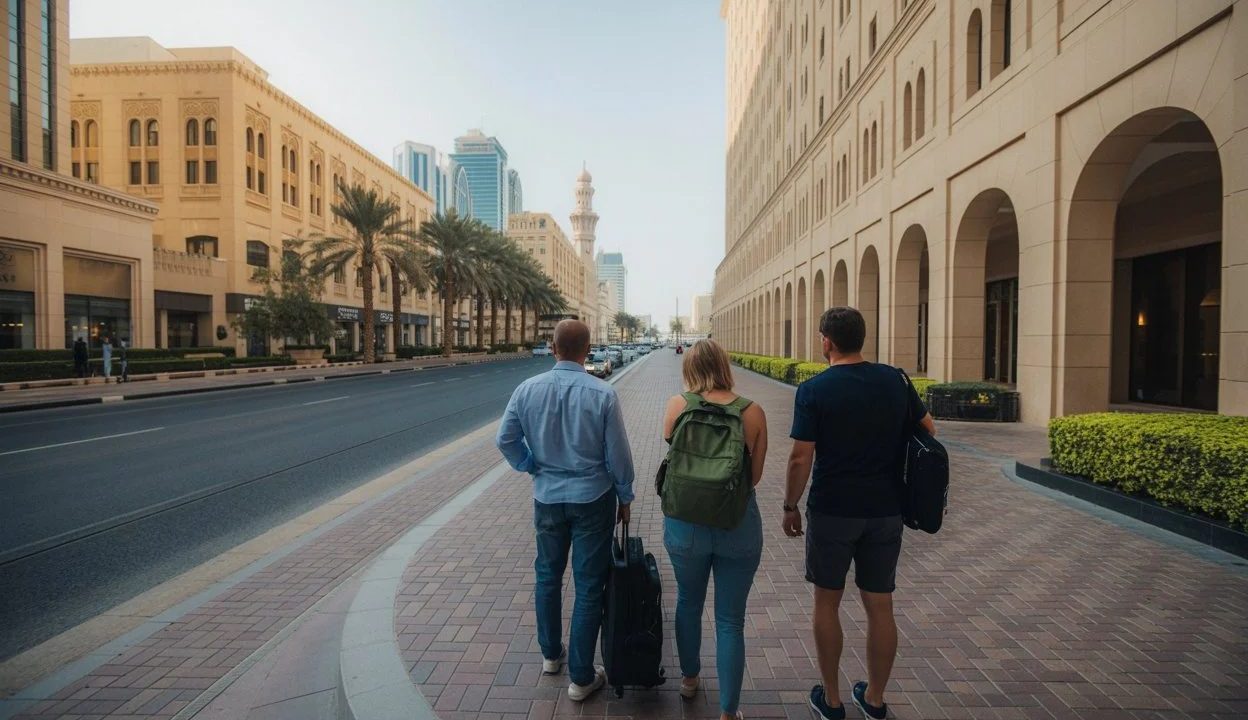
Zara Khalil stared at her phone screen in disbelief as the notification flashed: “Flight DXB-3847 to London has been indefinitely delayed due to regional security concerns.” The 28-year-old marketing executive from Dubai had been planning this European business trip for months, and now she found herself stranded at Dubai International Airport with hundreds of other confused passengers.
What happened next surprised her more than the flight cancellation itself. Within thirty minutes, representatives from three major UAE hotels appeared at the airport gates, offering complimentary accommodations, meals, and transportation to displaced travelers. “I couldn’t believe it,” Zara recalls. “They weren’t even asking which airline we flew with or demanding proof of our situation. They just wanted to help.”
This scene has become increasingly common across the UAE as the region’s hospitality industry steps up to support travelers caught in the crossfire of the ongoing Middle East crisis that has dramatically reshaped travel patterns throughout 2026.

How Regional Tensions Are Reshaping UAE Tourism
The Middle East crisis, which escalated significantly in early 2026, has created unprecedented challenges for the region’s travel and tourism sector. The UAE, traditionally positioned as a stable hub connecting East and West, has found itself navigating complex geopolitical waters while trying to maintain its reputation as a premier destination.
Airlines have been forced to reroute flights, avoiding contested airspace and extending journey times by several hours. Many international carriers have suspended services to certain regional destinations, leaving passengers with limited options and often stranding them in transit hubs like Dubai and Abu Dhabi.

The crisis has fundamentally changed how we approach guest services. We’re not just hosting tourists anymore – we’re providing sanctuary for people who need our help.
— Ahmad Al-Mansouri, General Manager, Emirates Palace
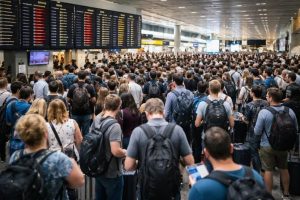
The UAE government has responded by implementing emergency protocols that streamline visa processes for stranded travelers and coordinate with the hospitality sector to ensure adequate accommodation. This collaborative approach has turned what could have been a humanitarian crisis into a showcase of regional solidarity.
UAE Hotels Lead Unprecedented Support Initiative
The response from UAE’s hotel industry has been nothing short of remarkable. Major hotel chains and independent properties alike have launched coordinated efforts to assist displaced travelers, going far beyond standard customer service expectations.

Here’s how UAE hotels are supporting stranded travelers:
- Emergency accommodation programs offering discounted or free rooms for verified stranded passengers
- Extended checkout policies allowing guests to stay until alternative travel arrangements are confirmed
- Complimentary meal services for families with children and elderly travelers
- 24/7 travel assistance desks staffed with multilingual coordinators
- Free airport shuttle services running every 30 minutes to major terminals
- Communication support including international calling facilities and WiFi access
| Hotel Chain | Support Offered | Capacity |
|---|---|---|
| Jumeirah Group | 50% discount + meal vouchers | 2,500 rooms |
| Rotana Hotels | Free accommodation for families | 1,800 rooms |
| Emirates Palace | Luxury suites at standard rates | 400 rooms |
| Independent Properties | Case-by-case assistance | 3,200 rooms |
We’ve seen occupancy rates fluctuate wildly, but our focus isn’t on profit margins right now. It’s about maintaining Dubai’s reputation as a city that takes care of people.
— Fatima Al-Zahra, Director of Operations, Dubai Tourism Board
The Human Cost of Crisis Tourism
Beyond the logistical challenges, the crisis has revealed the deeply personal impact of geopolitical instability on ordinary travelers. Families separated across continents, business deals postponed indefinitely, and vacation dreams turned into survival stories have become the new reality for thousands of people.
The UAE’s tourism sector has had to rapidly adapt its services to meet these unexpected needs. Hotel staff have been retrained to provide crisis counseling, concierge services now include embassy contact assistance, and many properties have converted conference rooms into temporary childcare facilities for stranded families.
International tourists who had planned leisure trips to the UAE are finding themselves extending their stays not by choice, but by necessity. Many have discovered an unexpected silver lining in the warmth and generosity of their hosts during this difficult time.
I came to Dubai for a three-day stopover and ended up staying two weeks. The hotel staff treated us like family, not customers. It completely changed how I see this city.
— Roberto Silva, stranded passenger from Brazil
Long-term Impact on Regional Travel Patterns
The crisis is fundamentally reshaping how travelers view the Middle East as a destination and transit hub. While some markets have seen decreased demand due to security concerns, others are experiencing unexpected growth as the UAE positions itself as a safe haven within a turbulent region.
Tourism industry analysts predict that the UAE’s response to this crisis will have lasting positive effects on its international reputation. The images of hotels opening their doors to stranded travelers and the government’s swift coordination efforts are creating powerful goodwill that extends far beyond the immediate crisis.
However, the financial impact on the hospitality sector remains significant. Many hotels are operating at reduced profit margins while maintaining higher service levels, creating sustainability concerns for smaller properties.
This crisis is testing our industry in ways we never imagined, but it’s also showing the world what Middle Eastern hospitality really means. That’s worth more than any marketing campaign.
— Hassan Al-Rashid, CEO, Dubai Hotel Association
The ripple effects extend beyond hotels to restaurants, tour operators, and retail establishments throughout the UAE. Many businesses have joined the solidarity movement, offering discounts and special services to affected travelers.
Looking Forward: Resilience in Uncertainty
As the crisis continues to evolve, the UAE’s tourism industry is adapting with remarkable flexibility. New partnerships between hotels, airlines, and government agencies are creating more robust support systems for future disruptions.
The lessons learned from managing this unprecedented situation are already being incorporated into emergency response protocols. The UAE is developing what may become a model for crisis tourism management that other destinations could adopt.
For travelers, the message is clear: while the Middle East faces ongoing challenges, the UAE remains committed to maintaining its position as a welcoming, safe destination that puts human dignity above profit margins.
FAQs
Are UAE hotels still accepting stranded travelers?
Yes, most major hotel chains continue to offer support programs, though availability varies by location and season.
How long can stranded passengers stay at reduced rates?
Most hotels allow extended stays until confirmed alternative travel arrangements are made, typically reviewed weekly.
Is it safe to travel to the UAE during the current crisis?
The UAE government maintains that the country remains safe for tourists, with enhanced security measures at all major tourist areas.
What documentation do stranded travelers need for hotel assistance?
Generally, a valid passport and proof of flight disruption (cancelled ticket or airline notification) are sufficient.
Are there additional costs for extended stays?
Many hotels waive change fees and offer significant discounts, though guests are typically responsible for incidental charges like meals and services.
How is this affecting future travel bookings to the UAE?
While some markets show decreased bookings, others are increasing as travelers view the UAE as a stable destination within the region.

Leave a Reply