
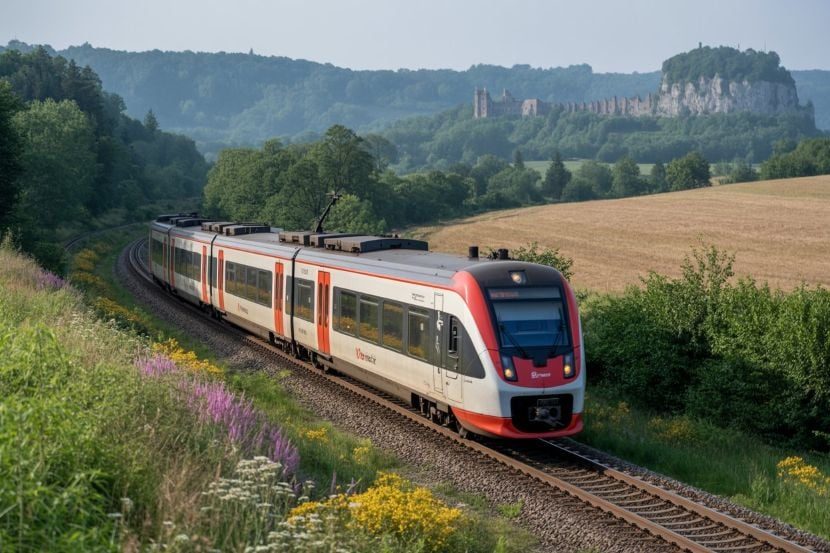
Tomasz stepped off the sleek new train at Kraków Główny station, his eyes widening as he took in the transformed terminal around him. Just five years ago, this same journey from Warsaw had been a bumpy, outdated experience that left him questioning Poland’s rail infrastructure. Now, gliding through the countryside at speeds he never imagined possible on Polish tracks, he couldn’t help but smile.

“This feels like traveling through Switzerland,” he whispered to his daughter, who was equally mesmerized by the modern station’s glass ceiling and digital displays showing connections to destinations across Europe.
What Tomasz experienced isn’t just a single success story—it’s the result of Poland’s most ambitious railway transformation in decades, with Kraków emerging as the crown jewel of a EUR 750 million infrastructure revolution that’s reshaping European tourism.
Poland’s Railway Renaissance Puts Kraków on the Map
The numbers tell an incredible story. Poland has invested heavily in modernizing its railway network, with Kraków receiving the lion’s share of improvements that have transformed it from a regional destination into Europe’s fastest-growing tourism hub.
This massive infrastructure overhaul encompasses high-speed rail connections, modernized stations, and cutting-edge technology that rivals the best railway systems in Western Europe. The project has reduced travel times dramatically—what once took five hours between major cities now takes less than three.

The transformation we’re seeing in Kraków is unprecedented. We’ve essentially built a 21st-century railway system that connects seamlessly with the rest of Europe.
— Anna Kowalczyk, Polish Ministry of Infrastructure

The ripple effects extend far beyond just faster trains. Hotel bookings in Kraków have surged by 40% since the new railway connections opened, while restaurant revenues in the historic city center have jumped by nearly 35%.
Breaking Down the EUR 750 Million Investment
Where exactly did all this money go? The investment wasn’t just about laying new tracks—it represented a complete reimagining of how Poland connects with Europe.

| Investment Area | Amount (EUR Million) | Impact |
|---|---|---|
| High-Speed Track Construction | 320 | Reduced travel times by 45% |
| Station Modernization | 180 | Enhanced passenger experience |
| Digital Infrastructure | 125 | Real-time tracking and booking |
| Rolling Stock | 85 | New trains with premium amenities |
| Safety Systems | 40 | European-standard safety protocols |
The crown jewel of this investment is the new high-speed connection linking Kraków directly to Berlin, Vienna, and Prague. These routes have opened up entirely new tourism corridors, making Poland an integral part of Central European travel circuits.
Key improvements include:
- Ultra-modern trains with Wi-Fi, power outlets, and premium seating
- Seamless integration with European booking systems
- Multilingual staff and digital displays
- Climate-controlled cars with panoramic windows
- Dedicated spaces for bicycles and luggage
- Onboard dining with local Polish specialties
We’re not just moving people from point A to point B anymore. We’re creating an experience that starts the moment travelers step onto our platforms.
— Marek Nowak, Kraków Tourism Board Director
Tourism Numbers That Tell the Real Story
The statistics emerging from Kraków paint a picture of remarkable success. International visitors have increased by 65% since the railway improvements began, with German and Austrian tourists leading the surge.
Perhaps most impressive is how the improved connectivity has changed travel patterns. Instead of flying into Warsaw and taking connecting flights or lengthy bus rides, tourists now arrive in Berlin or Vienna and seamlessly continue to Kraków by train—often in greater comfort than they’d experience on short-haul flights.
The economic impact spreads throughout the region:
- Hotel occupancy rates in Kraków: Up 42%
- Average tourist spending: Increased by EUR 85 per visit
- New tourism-related jobs created: Over 8,000
- Restaurant bookings: 38% increase year-over-year
- Cultural site visits: 50% growth in international visitors
The railway investment has been a game-changer for our business. We’re seeing guests who specifically choose our hotel because they can arrive by train rather than dealing with airport hassles.
— Katarzyna Zielińska, Boutique Hotel Owner
What This Means for European Travel
Poland’s railway success story represents something larger than national infrastructure improvement—it’s reshaping how Europeans think about sustainable travel and regional tourism.
The environmental benefits alone are substantial. Each high-speed train replacing short-haul flights removes approximately 150 tons of CO2 emissions annually. With growing awareness of climate impact, many travelers actively seek train alternatives to flying.
For tourists, the benefits are immediate and tangible. Gone are the days of arriving at airports hours early, dealing with security lines, and cramped airplane seats. The new Polish railway experience offers spacious seating, reliable schedules, and the ability to work or relax during travel.
The success has sparked interest from other Central European countries. Czech Republic and Hungary are now studying Poland’s model, potentially creating a high-speed railway network that could transform tourism across the entire region.
Poland has shown that strategic railway investment can completely transform a country’s tourism profile. We’re seeing visitor numbers that would have been impossible without this infrastructure.
— Dr. Pavel Novotny, European Tourism Research Institute
Looking ahead, Phase Two of Poland’s railway modernization is already in planning stages, with routes extending to coastal cities like Gdansk and connections to Scandinavia under consideration.
The transformation that began with that EUR 750 million investment has proven that infrastructure spending, when done thoughtfully, creates lasting economic benefits that extend far beyond transportation. Kraków’s emergence as a European tourism leader demonstrates how modern connectivity can unlock a region’s potential and create sustainable growth for decades to come.
FAQs
How much faster are the new trains compared to the old system?
The new high-speed connections have reduced travel times by approximately 45%, with some routes seeing even greater improvements.
Can tourists book these trains online in English?
Yes, the booking system is fully integrated with European railway networks and available in multiple languages including English, German, and French.
Are the new trains more expensive than the old ones?
While premium services cost more, standard tickets are competitively priced and often cheaper than equivalent flights when you factor in airport fees and transportation costs.
Do the trains connect directly to other European cities?
Yes, direct high-speed connections now link Kraków to Berlin, Vienna, Prague, and other major Central European destinations.
What amenities are available on the new trains?
Modern trains feature Wi-Fi, power outlets, climate control, panoramic windows, onboard dining, and dedicated spaces for luggage and bicycles.
How has this affected tourism in other Polish cities?
While Kraków has seen the biggest boost, improved connections have increased tourism throughout Poland, with Warsaw and Wrocław also experiencing significant growth.

Leave a Reply