
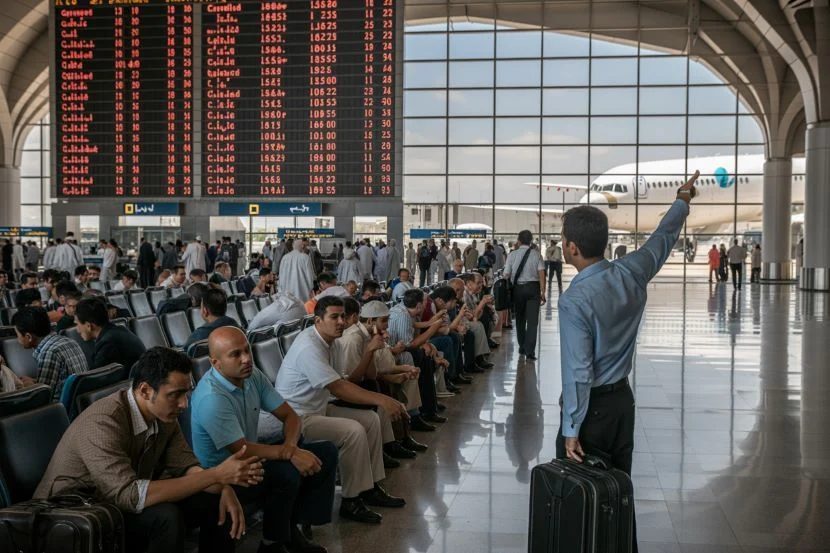
Amira clutched her boarding pass as she stared at the departure board at Dubai International Airport. Flight QR 451 to Barcelona – CANCELLED. Around her, hundreds of other travelers wore the same expression of disbelief and frustration. “I have a wedding to attend tomorrow,” she whispered to her husband, voice trembling. “My sister’s wedding.”
What started as a routine Thursday morning has turned into a nightmare for thousands of travelers across the Middle East. Airport terminals from Dubai to Tel Aviv are packed with stranded passengers, their carefully planned journeys reduced to chaos.
This isn’t just a minor hiccup in air travel. We’re looking at one of the most significant flight disruptions the region has seen in recent months, affecting major airlines and leaving travelers scrambling for alternatives.

Mass Flight Cancellations Bring Middle East Travel to a Standstill
The numbers are staggering. A total of 708 flights have been grounded across seven countries, while another 302 flights face significant delays. The United Arab Emirates, Bahrain, Oman, Jordan, Kuwait, and Israel have all been hit hard by this unprecedented disruption.
Major airlines including Qatar Airways, Saudia, Air France, and KLM have been forced to cancel or delay flights to key destinations like Jeddah, Sharjah, Barcelona, Munich, and Houston. The ripple effect is being felt far beyond the Middle East, with connecting flights to Europe, Asia, and the Americas all impacted.

This is one of the most challenging operational situations we’ve faced this year. Our priority is getting passengers to their destinations safely, even if it means significant delays.
— Regional Aviation Operations Manager

The disruption appears to stem from a combination of factors including severe weather conditions, air traffic control restrictions, and operational challenges that have created a perfect storm for travelers.
Airlines are working around the clock to rebook passengers, but with such a massive number of affected flights, many travelers are facing delays of 24 hours or more. Hotel accommodations near major airports are filling up quickly, and rental car agencies report unprecedented demand.

Which Airlines and Routes Are Hit Hardest
The flight cancellations and delays are affecting virtually every major carrier operating in the region. Here’s a breakdown of the most impacted airlines and destinations:
| Airline | Cancelled Flights | Delayed Flights | Most Affected Routes |
|---|---|---|---|
| Qatar Airways | 156 | 89 | Doha-Barcelona, Doha-Munich |
| Saudia | 142 | 67 | Jeddah-Houston, Riyadh-London |
| Air France | 98 | 45 | Dubai-Paris, Kuwait-Paris |
| KLM | 87 | 38 | Amsterdam-Dubai, Amsterdam-Tel Aviv |
| Emirates | 125 | 42 | Dubai-Barcelona, Dubai-Munich |
| Other Airlines | 100 | 21 | Various regional routes |
The most severely impacted routes include:
- Middle East to European destinations (Barcelona, Munich, Paris, Amsterdam)
- Regional flights within the Gulf states
- Long-haul routes to North America (Houston, New York, Toronto)
- Connections through major hubs like Dubai, Doha, and Kuwait City
- Religious pilgrimage routes to Jeddah and Medina
We’re seeing passengers who’ve been traveling for over 30 hours trying to reach their final destinations. It’s heartbreaking, especially for those with urgent family matters or important business meetings.
— Airport Customer Service Supervisor
Real Impact on Travelers and What Comes Next
Beyond the statistics lie real human stories of disruption. Business travelers are missing crucial meetings, families are separated from loved ones, and vacation plans are in ruins. The economic impact extends far beyond airline losses – hotels, tour operators, and ground transportation services are all feeling the effects.
Passengers stuck in transit are facing additional costs for accommodation, meals, and rebooking fees. Travel insurance claims are expected to spike as travelers seek compensation for missed connections and extended delays.
The situation is particularly challenging for travelers on religious pilgrimages, with many flights to Jeddah cancelled during what should be a spiritually significant journey. Airlines are prioritizing these passengers for rebooking, but capacity remains limited.
This disruption highlights how interconnected modern air travel is. When major Middle Eastern hubs go down, the effects are felt globally within hours.
— Aviation Industry Analyst
Airlines are implementing several measures to address the crisis:
- Waiving rebooking fees for affected passengers
- Providing meal vouchers and hotel accommodations
- Adding extra flights on less-affected routes
- Partnering with other airlines to accommodate stranded passengers
- Setting up dedicated customer service teams at major airports
Recovery efforts are underway, but aviation experts warn that it could take several days for flight schedules to return to normal. The backlog of passengers needing to be rebooked means that even when operations resume, demand will far exceed available seats.
We’re looking at a domino effect that will take time to resolve. Even after the immediate issues are addressed, airlines will need days to work through the passenger backlog.
— Middle East Aviation Consultant
For travelers planning trips in the coming days, airlines recommend checking flight status frequently, arriving at airports early, and having backup plans ready. Travel insurance purchases have surged as people become more aware of how quickly travel plans can change.
The disruption serves as a stark reminder of how vulnerable modern air travel can be to operational challenges. As the industry works to restore normal service, thousands of travelers remain in limbo, hoping their next update brings better news than the last.
FAQs
What caused the massive flight cancellations across the Middle East?
The disruptions appear to result from a combination of severe weather conditions, air traffic control restrictions, and operational challenges affecting multiple countries simultaneously.
Which airlines are offering compensation to affected passengers?
Most major airlines including Qatar Airways, Saudia, Emirates, Air France, and KLM are waiving rebooking fees and providing meal vouchers and hotel accommodations for stranded passengers.
How long will it take for flight schedules to return to normal?
Aviation experts estimate it could take several days to restore normal operations and work through the backlog of passengers needing rebooking.
Are connecting flights to other regions also affected?
Yes, the disruption is impacting connecting flights to Europe, Asia, and the Americas, as major Middle Eastern hubs serve as key transit points for international travel.
What should travelers do if their flight is cancelled or delayed?
Contact your airline immediately for rebooking options, keep all receipts for additional expenses, check if you’re eligible for compensation, and consider travel insurance for future trips.
Are religious pilgrimage flights being prioritized for rebooking?
Airlines report they are giving priority to passengers traveling for religious purposes, particularly those heading to Jeddah and Medina, though capacity remains limited.

Leave a Reply