
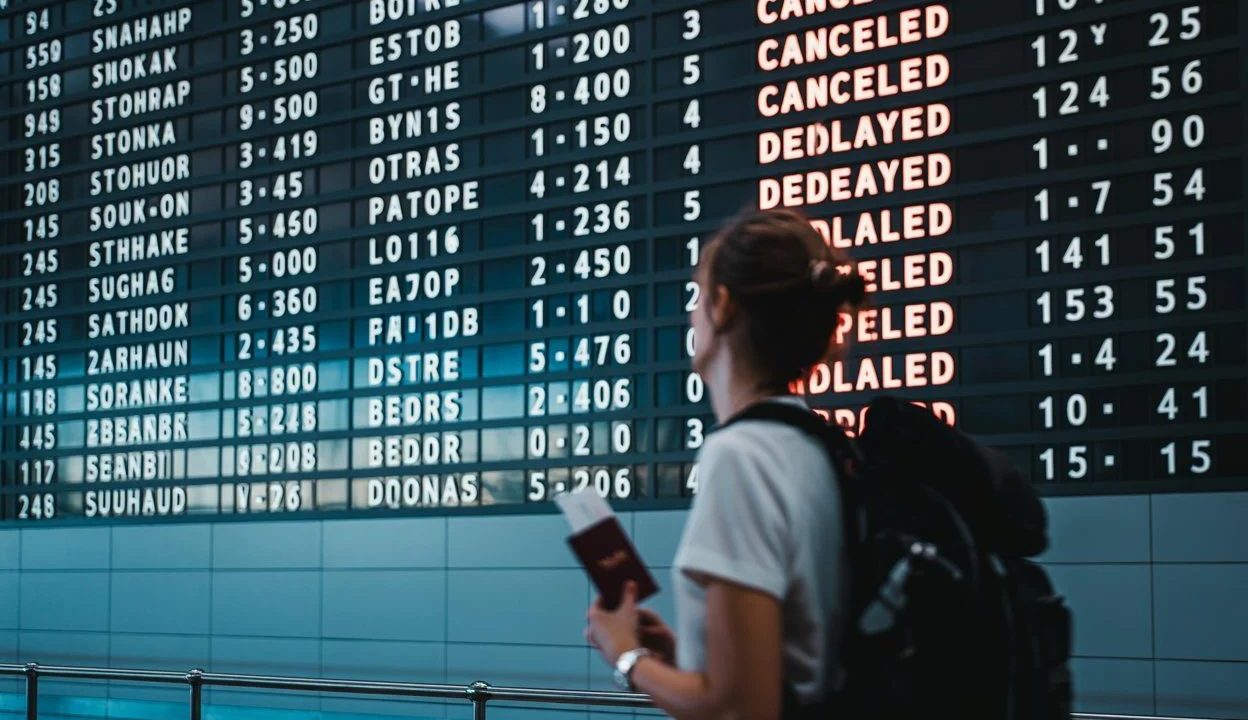
Kamolchai stared at the departure board at Bangkok’s Suvarnabhumi Airport, watching flight after flight to Europe flash “DELAYED” or “CANCELLED.” The tour operator had planned this group trip for months, coordinating 45 European tourists eager to explore Thailand’s temples and beaches.

“We’ve never seen anything like this,” she whispered to her colleague, clutching a stack of booking confirmations that suddenly felt worthless. “These aren’t just flights—these are people’s dream vacations, and our entire business depends on them getting here.”
What Kamolchai didn’t realize was that her small crisis represented something much larger. Across Thailand, an entire tourism industry worth billions was teetering on the edge of disaster, all because of airspace thousands of miles away.

When Middle East Conflicts Ground Thai Dreams
Thailand’s tourism sector is facing an unprecedented crisis as ongoing conflicts in the Middle East force airlines to avoid crucial airspace corridors. The result? A potential 40 billion baht loss that could devastate the country’s economic recovery.
The disruption stems from airlines rerouting flights around conflict zones, particularly affecting the crucial Europe-Thailand travel corridor. These longer routes mean higher fuel costs, extended flight times, and ultimately, cancelled services that leave Thailand disconnected from some of its most valuable tourist markets.

The situation is evolving daily, and we’re seeing European carriers particularly affected. When you can’t guarantee reliable flight schedules, tourists simply choose other destinations.
— Thanet Supornsahasrungsi, Tourism Authority of Thailand spokesperson

Thailand’s tourism industry, which typically contributes around 20% of the country’s GDP, was just beginning to recover from pandemic losses. Now, this new challenge threatens to set back progress by years rather than months.
The Numbers Behind Thailand’s Tourism Crisis
Understanding the scope of this crisis requires looking at the cold, hard data. The 40 billion baht loss projection isn’t just a number—it represents real economic devastation across multiple sectors.
| Impact Category | Projected Loss (Billion Baht) | Affected Workers |
|---|---|---|
| Hotel & Accommodation | 18.5 | 450,000 |
| Transportation | 8.2 | 120,000 |
| Food & Beverage | 7.8 | 380,000 |
| Tour Operations | 3.9 | 85,000 |
| Retail & Shopping | 1.6 | 95,000 |
The most affected routes include:
- Bangkok to London, Paris, and Frankfurt
- Phuket to major European hubs
- Chiang Mai international connections
- Ko Samui to European destinations
European tourists typically account for approximately 15% of Thailand’s international visitors, but they tend to stay longer and spend more than average. Their absence creates a disproportionate economic impact.
European visitors average 12 days in Thailand compared to 7 days for other regions. They’re not just numbers—they’re high-value guests who support local communities across the country.
— Dr. Somporn Chareonsuk, Tourism Economics Institute
Real People, Real Consequences
Behind every statistic lies a human story. Small guesthouse owners in Chiang Mai are watching booking cancellations pile up. Street food vendors near popular tourist areas report 40% drops in daily sales. Tour guides fluent in German and French find themselves without work.
The ripple effects extend far beyond Bangkok’s tourist districts. In rural areas where community-based tourism provides crucial supplementary income, families are already feeling the pinch. Elephant sanctuaries, cultural villages, and artisan workshops that depend on European tour groups face an uncertain future.
Hotel occupancy rates in key destinations tell the story:
- Bangkok luxury hotels: Down 25% from projections
- Phuket beach resorts: 30% decrease in European bookings
- Chiang Mai boutique properties: 35% cancellation rate
- Koh Samui accommodations: 28% below expected capacity
We’re not just losing tourists for a few weeks. The uncertainty means people are booking alternative destinations for trips planned six months ahead. Recovery will take much longer than the actual flight disruptions.
— Marisa Sukosol Nunbhakdi, Thai Hotels Association President
Government Response and Industry Adaptation
Thai authorities aren’t sitting idle. The Tourism Authority of Thailand has launched emergency marketing campaigns targeting alternative markets, particularly in East Asia and Australia. They’re also working with airlines to establish temporary routes through different corridors.
Some innovative solutions emerging include:
- Partnership deals with Middle Eastern carriers for connecting flights
- Promotional packages for extended stays to justify longer travel times
- Focus on domestic tourism to partially offset international losses
- Accelerated visa processing for affected European travelers
The government has also announced a 5 billion baht emergency support package for tourism businesses, though industry experts argue this covers only a fraction of the projected losses.
We’re adapting quickly, but this situation highlights how vulnerable our tourism industry is to external shocks. We need more diversified source markets and better crisis management systems.
— Phiphat Ratchakitprakarn, Thailand’s Tourism and Sports Minister
Looking Beyond the Crisis
While the immediate focus remains on managing current disruptions, this crisis is forcing Thailand’s tourism industry to confront longer-term vulnerabilities. Over-reliance on specific flight routes and source markets has created systemic risks that extend beyond geopolitical conflicts.
Industry leaders are already discussing structural changes: developing stronger domestic tourism, building relationships with emerging markets, and creating more flexible booking and cancellation policies that can weather future disruptions.
The 40 billion baht loss projection assumes disruptions continue for six months. If conflicts escalate or extend longer, the economic impact could double. Conversely, rapid resolution could limit losses to 20-25 billion baht—still significant, but manageable.
For now, people like Kamolchai continue adapting daily, rearranging itineraries, comforting disappointed travelers, and hoping that the skies—literal and metaphorical—clear soon.
FAQs
How long are the Middle East airspace disruptions expected to last?
Current projections suggest disruptions could continue for 3-6 months, depending on regional conflicts and diplomatic developments.
Which Thai destinations are most affected by flight cancellations?
Bangkok, Phuket, and Chiang Mai are seeing the highest impact, as they rely heavily on direct European flights.
Are there alternative routes for European travelers to reach Thailand?
Yes, connecting flights through Middle Eastern hubs, Singapore, or Hong Kong remain available, though with longer travel times and higher costs.
What support is available for affected tourism businesses?
The Thai government announced a 5 billion baht emergency package including low-interest loans and tax deferrals for tourism operators.
Will hotel and tour prices decrease due to lower demand?
Some properties are offering promotional rates, but many are maintaining prices while reducing capacity to manage fixed costs.
How does this crisis compare to COVID-19’s impact on Thai tourism?
While smaller in absolute terms, this crisis affects specific high-value market segments and could have disproportionate long-term effects on recovery momentum.

Leave a Reply