
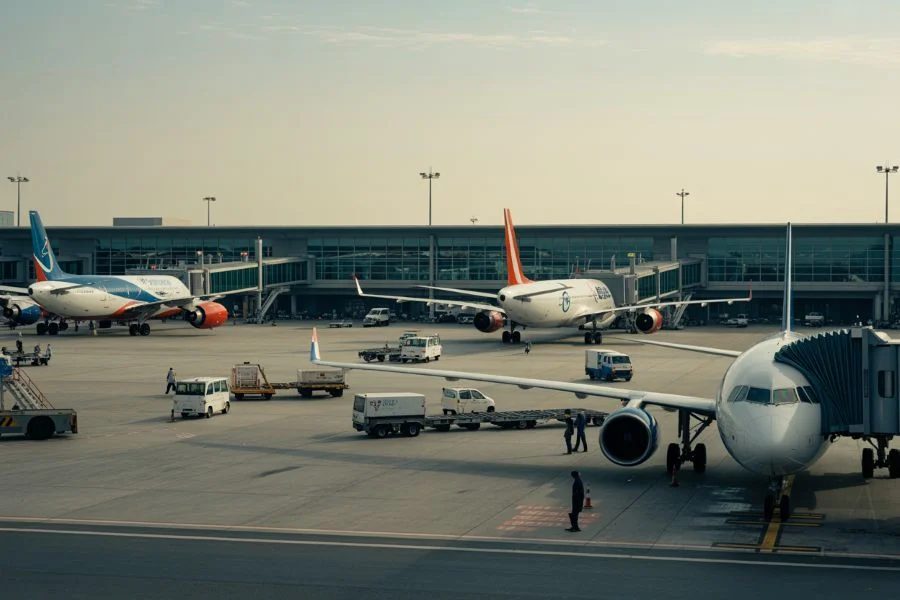
Marcus, a seasoned business traveler who’s been flying through Gatwick for over fifteen years, stared at his phone in disbelief. His usual Tuesday morning flight to Amsterdam had just been canceled – the third cancellation this month. “I’ve never seen anything like this,” he muttered to the woman next to him at the departure gate. “It’s like the planes have just vanished.”

She nodded knowingly. “My daughter works for one of the airlines here. Says they’re struggling to get aircraft, and when they do, half the routes aren’t profitable anymore.”
Marcus isn’t alone in his frustration. What he’s experiencing firsthand is part of a much larger crisis that’s hitting London Gatwick Airport hard – and it’s reshaping how we think about European air travel.

The Perfect Storm Hitting Gatwick’s Bottom Line
London Gatwick Airport is facing its toughest financial challenge in years, with profits taking a significant hit as a double crisis unfolds. The airport, Britain’s second-busiest hub, is caught between two major problems: a severe shortage of aircraft across European aviation and a short-haul flight crisis that’s making many routes financially unviable.
The numbers tell a stark story. Gatwick has seen a notable decline in profitability as airlines struggle to maintain their short-haul European routes. This isn’t just about one or two carriers – it’s an industry-wide problem that’s forcing airlines to make tough decisions about which routes to keep and which to cut.

The aircraft shortage is unlike anything we’ve seen in recent memory. Airlines are having to choose between maintaining frequency on profitable routes or keeping less viable connections alive.
— Aviation industry analyst
The crisis stems from multiple factors converging at once. Post-pandemic recovery has been uneven, with business travel – particularly on short-haul routes – still significantly below pre-2020 levels. Meanwhile, aircraft manufacturers are struggling with delivery delays, leaving airlines with aging fleets and limited options for expansion or replacement.
Breaking Down the Crisis: What’s Really Happening
The situation at Gatwick reflects broader challenges facing European aviation. Here’s what’s driving this crisis:

- Aircraft Supply Chain Disruptions: Major manufacturers like Boeing and Airbus are experiencing significant delivery delays, leaving airlines waiting months or even years for new aircraft
- Short-Haul Route Economics: Rising fuel costs, labor shortages, and reduced business travel have made many European short-haul routes unprofitable
- Competition from Low-Cost Carriers: Traditional airlines are being squeezed by budget carriers that can operate more efficiently on short routes
- Regulatory Pressures: Environmental regulations and slot restrictions are adding operational complexity and costs
| Challenge | Impact on Gatwick | Timeline |
|---|---|---|
| Aircraft Shortages | Reduced flight frequency | Ongoing through 2025 |
| Short-haul Profitability | Route cancellations | Immediate |
| Business Travel Decline | Lower passenger numbers | Gradual recovery expected |
| Operational Costs | Squeezed airline margins | Persistent challenge |
We’re seeing airlines make really difficult choices about their European networks. Routes that were profitable three years ago simply don’t make financial sense anymore.
— Airport operations expert
Who’s Feeling the Impact Most
The ripple effects of Gatwick’s challenges extend far beyond the airport itself. Business travelers like Marcus are experiencing the most immediate disruption, with reduced flight options and higher prices on remaining routes.
Leisure travelers aren’t immune either. Popular European destinations that once had multiple daily flights from Gatwick are now served less frequently, making trip planning more challenging and expensive. Some smaller European cities have lost their Gatwick connections entirely.
Local businesses around the airport are also feeling the pinch. Hotels, car rental companies, and restaurants that depend on steady passenger traffic are reporting noticeable declines in revenue.
The frequency reduction on key European routes is forcing us to rethink our entire travel strategy. We’re having to use other airports or accept less convenient timing.
— Corporate travel manager
The Broader European Aviation Landscape
Gatwick’s struggles mirror challenges facing airports across Europe. The aircraft shortage isn’t just a British problem – it’s a continental crisis that’s forcing a fundamental rethink of how European aviation operates.
Airlines are being forced to prioritize their most profitable routes, often favoring long-haul international flights over short-haul European connections. This shift is particularly challenging for airports like Gatwick that have traditionally served as major European hubs.
The environmental dimension adds another layer of complexity. As European governments push for reduced aviation emissions, airlines are under pressure to operate more efficiently – but with fewer aircraft available, achieving these efficiency gains becomes increasingly difficult.
What This Means for Your Travel Plans
If you’re planning European travel through Gatwick, expect some significant changes. Flight schedules are likely to remain volatile, with airlines continuing to adjust routes based on aircraft availability and profitability.
Prices on remaining routes may increase as reduced competition and limited capacity drive up costs. The days of abundant cheap short-haul flights to European destinations may be temporarily behind us.
However, this crisis is also driving innovation. Airlines are exploring new partnerships, code-sharing arrangements, and more efficient aircraft utilization to maintain connectivity while managing costs.
We’re in a transition period. The European aviation network that emerges from this crisis will look different, but it should be more sustainable and resilient.
— Aviation strategy consultant
Looking Ahead: Signs of Recovery
Despite current challenges, there are reasons for cautious optimism. Aircraft manufacturers are gradually addressing supply chain issues, and new aircraft deliveries are expected to increase through 2024 and 2025.
Gatwick itself is adapting, working closely with airlines to optimize slot usage and exploring new partnership opportunities. The airport is also investing in infrastructure improvements to handle traffic more efficiently when capacity returns.
The key will be patience. This crisis didn’t develop overnight, and recovery will take time. But for travelers like Marcus, understanding what’s happening behind the scenes can help set realistic expectations and make better travel decisions.
FAQs
Why are there so many flight cancellations at Gatwick recently?
The main causes are aircraft shortages affecting airlines and unprofitable short-haul routes being cut due to economic pressures.
Will flight prices increase because of these problems?
Yes, reduced capacity and limited competition on many routes are likely to push prices higher in the short term.
How long will this aircraft shortage last?
Industry experts expect the shortage to persist through 2024, with gradual improvement in 2025 as manufacturers catch up on deliveries.
Are other UK airports facing similar problems?
Yes, this is an industry-wide issue affecting airports across Europe, though the impact varies by location and route mix.
Should I avoid booking flights through Gatwick?
Not necessarily, but build flexibility into your travel plans and consider booking earlier to secure seats on remaining routes.
What’s being done to solve these problems?
Airlines are optimizing their networks, airports are improving efficiency, and manufacturers are working to resolve supply chain issues causing aircraft delays.

Leave a Reply