
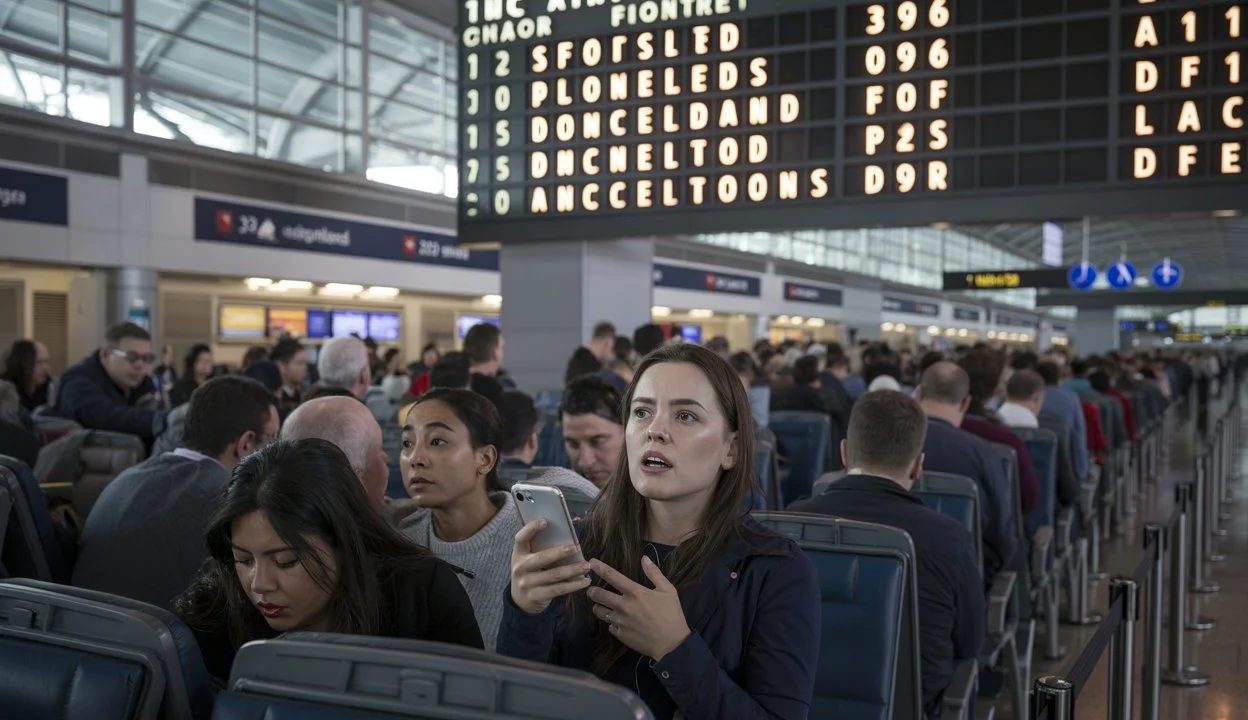
Marcus Williams was halfway through checking his boarding pass when the announcement crackled over the intercom at JFK Airport. “Ladies and gentlemen, we regret to inform you that Flight 447 to Los Angeles has been delayed indefinitely.” Around him, dozens of passengers let out collective groans, and Marcus felt his heart sink – his daughter’s graduation ceremony was tomorrow morning.
What started as a typical travel day quickly spiraled into chaos as hundreds of travelers found themselves stranded at John F. Kennedy International Airport. The scene that unfolded wasn’t just about missed connections or inconvenient delays – it was about real people watching important moments slip away.
By evening, the numbers painted a stark picture: 265 flights delayed and 31 completely canceled, affecting major airlines and leaving passengers scrambling for alternatives to reach destinations across the country.

When America’s Busiest Airport Grinds to a Halt
JFK Airport, one of the nation’s primary travel hubs, experienced a massive disruption that rippled through the entire air travel system. The scale of delays affected not just local travelers, but connecting passengers from around the world who depend on JFK as their gateway to American destinations.
Major airlines bore the brunt of the operational nightmare. Delta, JetBlue, and American Airlines – three carriers that handle a significant portion of JFK’s daily traffic – saw their schedules completely upended. Routes to popular destinations like Los Angeles, Miami, Chicago, and Dallas were particularly hard hit.

This kind of widespread disruption at JFK creates a domino effect that can impact air travel nationwide. When you’re talking about hundreds of delayed flights, you’re looking at thousands of passengers whose travel plans are completely derailed.
— Aviation Industry Analyst

The timing couldn’t have been worse for many travelers. Business meetings, family reunions, medical appointments, and once-in-a-lifetime events hung in the balance as departure boards filled with red “DELAYED” notifications.
Breaking Down the Numbers: Which Routes Hit Hardest
The disruption wasn’t evenly distributed across all destinations. Some routes experienced more severe delays than others, creating particular headaches for travelers heading to specific cities.

| Destination | Flights Affected | Average Delay Time | Airlines Most Impacted |
|---|---|---|---|
| Los Angeles | 45 flights | 3.5 hours | Delta, American |
| Miami | 38 flights | 2.8 hours | JetBlue, American |
| Chicago | 42 flights | 4.2 hours | American, Delta |
| Dallas | 35 flights | 3.1 hours | American |
The situation created a perfect storm of complications. Passengers faced several immediate challenges:
- Rebooking onto already full flights for the following days
- Finding last-minute hotel accommodations near the airport
- Dealing with non-refundable reservations at their destinations
- Managing connecting flights that were no longer viable
- Coordinating with employers about missed work commitments
For many travelers, the financial impact extended far beyond just airline tickets. Hotel cancellations, missed business opportunities, and additional accommodation costs quickly added up.
We’re seeing passengers who booked non-refundable hotels, rental cars, and event tickets. A flight delay becomes a cascade of financial losses that can cost travelers hundreds or even thousands of dollars.
— Travel Insurance Specialist
Real Stories from the Terminal Floor
Inside JFK’s terminals, the human drama played out in countless individual stories. Elderly passengers struggled to find comfortable places to rest during extended waits. Parents juggled cranky children while trying to rearrange family vacation plans. Business travelers frantically rescheduled important meetings via phone calls from crowded gate areas.
The airline customer service desks became overwhelmed as hundreds of passengers sought rebooking options. Wait times for assistance stretched to several hours, adding frustration to an already stressful situation.
Social media filled with real-time updates from stranded passengers sharing photos of packed terminals, long lines, and departure boards showing endless delays. Many expressed particular frustration with the lack of clear communication about when normal operations might resume.
The worst part isn’t just the delay – it’s not knowing when things will get back to normal. Passengers are making impossible decisions about whether to wait it out or try to find alternative transportation.
— Airport Operations Expert
What This Means for Future Travel Plans
Disruptions of this magnitude don’t just affect immediate travel – they create ripple effects that can impact flight schedules for days afterward. Airlines must reposition aircraft, reassign crew members, and work through a backlog of displaced passengers.
Travelers with upcoming flights through JFK should prepare for potential continued delays as the system works to return to normal operations. The recovery process often takes 48-72 hours after the initial disruption ends.
For passengers affected by the delays, airlines are required to provide certain accommodations depending on the circumstances. However, the specifics vary significantly between carriers and the underlying cause of the disruption.
Passengers should know their rights when it comes to significant delays. While airlines aren’t always required to provide compensation for weather-related delays, they often have policies for meals, hotel accommodations, and rebooking that can help minimize the impact.
— Consumer Travel Advocate
The incident serves as a reminder of how quickly air travel can be disrupted and the importance of having backup plans when flying. Travel insurance, flexible booking options, and allowing extra time for important trips can help mitigate the impact of unexpected delays.
As operations gradually return to normal, the focus shifts to preventing similar widespread disruptions in the future and improving communication with passengers during crisis situations.
FAQs
What should I do if my JFK flight is delayed or canceled?
Contact your airline immediately for rebooking options and ask about meal vouchers or hotel accommodations if the delay extends overnight.
Am I entitled to compensation for flight delays?
Compensation depends on the cause of the delay and your airline’s policies. Weather-related delays typically don’t qualify for monetary compensation, but airlines may provide vouchers or rebooking.
How long do these kinds of disruptions usually last?
Major airport disruptions typically take 48-72 hours to fully resolve as airlines work through passenger backlogs and reposition aircraft and crews.
Should I book alternative transportation during a delay?
Consider your timeline and the importance of your trip. For urgent travel, ground transportation might be worth exploring, but airline rebooking is usually more cost-effective.
Will travel insurance cover expenses from flight delays?
Many travel insurance policies include coverage for meals, accommodations, and additional transportation costs due to covered delays, but check your specific policy terms.
How can I stay updated on my flight status during disruptions?
Use your airline’s mobile app, sign up for text alerts, and monitor official airline social media accounts for the most current information.
Leave a Reply