
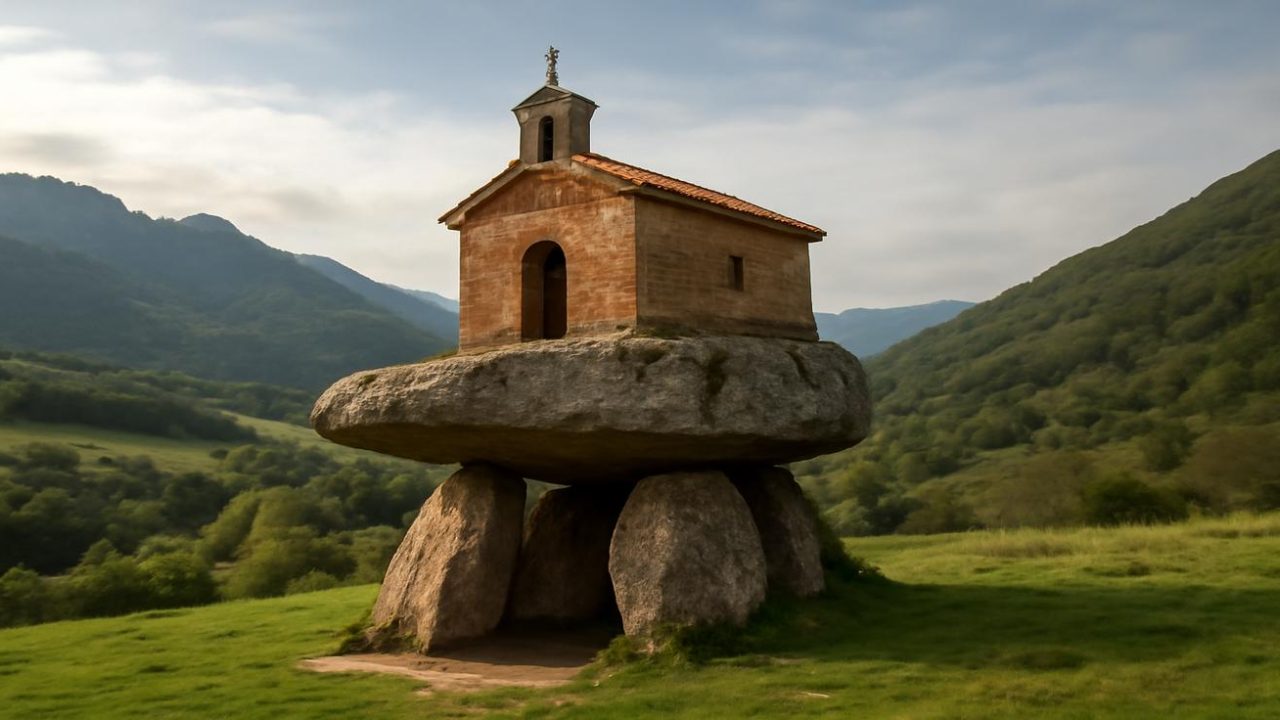
Enzo wiped the morning dew from his camera lens as he stood before what looked like an ordinary stone chapel. The 67-year-old photographer from Madrid had spent three decades capturing Spain’s hidden gems, but this discovery in rural Asturias left him speechless. “I thought I was just photographing another beautiful church,” he whispered to his hiking companion. “Then the local shepherd told me what was underneath.”
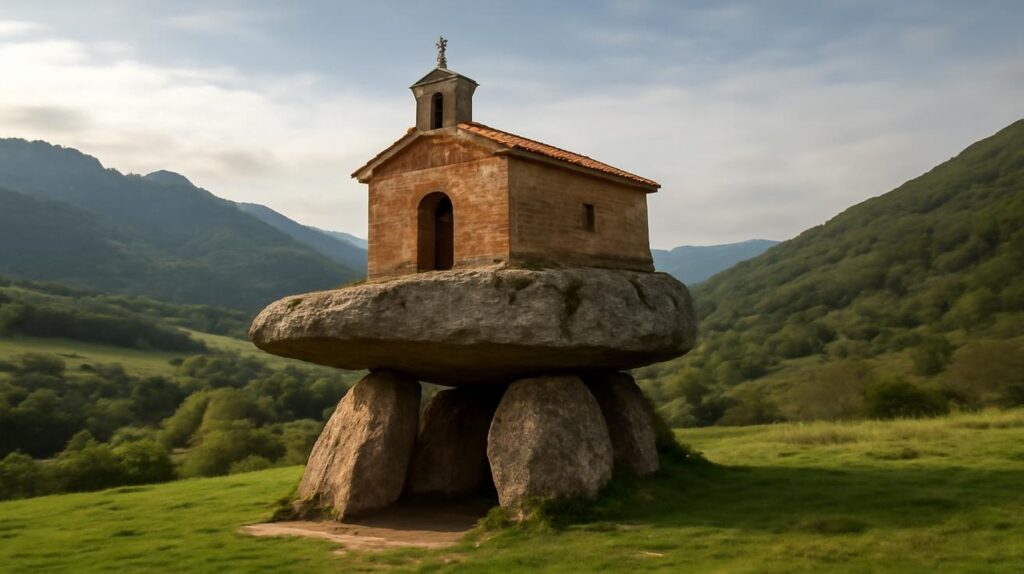
What Enzo had stumbled upon wasn’t just any chapel. Beneath the Christian stones of Santa Cruz de Cangas de Onís lies something far more ancient—a 5,000-year-old dolmen that predates Stonehenge by centuries. This remarkable fusion of prehistoric monument and medieval architecture represents one of Europe’s most extraordinary examples of religious continuity, yet most tourists rushing through Asturias never know it exists.
The chapel sits quietly in the Asturian countryside, its modest exterior giving no hint of the Neolithic treasure beneath. But for those who venture beyond Spain’s crowded coastal destinations, this hidden sanctuary offers a profound connection to both Christian heritage and Europe’s prehistoric past.
Where Ancient Stones Meet Sacred Walls
The Santa Cruz chapel represents something remarkable in European archaeology—a perfect marriage between prehistoric monument and Christian architecture. Built directly over a massive dolmen structure, the chapel demonstrates how early Christians often chose to sanctify rather than destroy ancient sacred sites.
The dolmen itself dates back to approximately 3000 BCE, making it older than most of Europe’s famous megalithic monuments. These massive stone structures served as burial chambers for Neolithic communities, marking sacred spaces that held spiritual significance for millennia before Christianity arrived in northern Spain.
This isn’t just architectural recycling—it’s a testament to the enduring power of sacred spaces. Ancient peoples chose this spot for profound spiritual reasons that transcended religious boundaries.
— Dr. Carmen Valdés, Asturian Archaeological Institute
The chapel’s construction in the early medieval period followed a common pattern throughout northern Spain, where Christian builders recognized the spiritual resonance of ancient sites. Rather than competing with prehistoric monuments, they incorporated them into new religious structures.
What makes this particular site extraordinary is how well-preserved both elements remain. Visitors can clearly see where ancient megalithic stones support medieval walls, creating a visual timeline spanning five millennia of human spirituality.
What Makes This Discovery So Special
The fusion of dolmen and chapel creates a unique archaeological site that offers insights into both prehistoric and medieval cultures. Here’s what makes this location truly exceptional:
| Feature | Age | Significance |
|---|---|---|
| Original Dolmen | 5,000 years | Neolithic burial chamber and sacred site |
| Chapel Construction | 800-1000 years | Early medieval Christian architecture |
| Stone Integration | Continuous | Original megalithic stones incorporated into walls |
| Burial Evidence | Multiple periods | Both prehistoric and medieval interments |
The architectural details reveal fascinating construction techniques:
- Massive dolmen capstones serve as foundation elements for chapel walls
- Original Neolithic chamber remains partially accessible beneath the altar area
- Medieval builders carefully preserved the dolmen’s astronomical alignments
- Stone carvings from both periods coexist on the same structural elements
- Underground passages connect the prehistoric chamber to medieval crypts
You can literally touch stones that were sacred to people 5,000 years ago, then look up and see Christian symbols carved by medieval craftsmen. It’s like holding history in your hands.
— Miguel Fernández, Local Heritage Guide
Archaeological investigations have revealed continuous use of the site across multiple historical periods. Evidence suggests the location maintained its sacred character through Celtic, Roman, Visigothic, and finally Christian periods—an unbroken chain of spiritual significance spanning five millennia.
Why Most Tourists Miss This Incredible Site
Despite its archaeological importance, the Santa Cruz chapel remains largely unknown to mainstream tourism. Its location in rural Asturias, away from major tourist routes, means most visitors never discover this extraordinary site.
The chapel sits approximately 15 kilometers from Cangas de Onís, accessible only by narrow country roads that wind through traditional Asturian villages. No tour buses rumble past, no souvenir shops cluster nearby—just authentic countryside and one of Europe’s most remarkable prehistoric-Christian monuments.
We prefer it this way, honestly. The site maintains its spiritual atmosphere because it hasn’t been commercialized. Visitors who make the effort to find us truly appreciate what they’re seeing.
— Father Antonio Ruiz, Local Parish Priest
Local tourism authorities have deliberately kept promotion low-key, focusing on sustainable cultural tourism rather than mass visitation. This approach preserves both the archaeological integrity and the contemplative atmosphere that makes the site so special.
The chapel’s remote location actually enhances the experience. Approaching through rolling green hills and traditional stone villages, visitors step back in time long before reaching the monument itself. The journey becomes part of the discovery.
For photography enthusiasts like Enzo, the lack of crowds means unlimited opportunities to capture the site’s details. Morning light filtering through ancient stones, medieval carvings emerging from prehistoric walls, wildflowers growing among 5,000-year-old megaliths—every angle reveals new wonders.
Planning Your Visit to This Hidden Treasure
Reaching the Santa Cruz chapel requires some planning, but the effort rewards visitors with an unparalleled historical experience. The site is open to visitors year-round, though spring and early autumn offer the most comfortable weather for exploration.
Local guides provide invaluable context, explaining how to identify different historical periods in the architecture and sharing stories passed down through generations of village residents. Many speak multiple languages and can arrange private tours for serious archaeology enthusiasts.
Every stone has a story. The prehistoric builders, medieval craftsmen, and modern caretakers all left their mark. Understanding these layers transforms a simple visit into a profound journey through human history.
— Elena Martínez, Cultural Heritage Specialist
The surrounding area offers additional attractions for visitors making the journey. Traditional Asturian villages showcase regional architecture, local restaurants serve authentic cuisine featuring regional specialties, and hiking trails connect to other lesser-known archaeological sites throughout the region.
Photography restrictions are minimal, allowing visitors to document their discovery while respecting the site’s sacred character. The combination of natural lighting and ancient architecture creates exceptional opportunities for both amateur and professional photographers.
FAQs
How do I reach the Santa Cruz chapel from major Asturian cities?
The chapel is about 45 minutes by car from Oviedo and 30 minutes from Cangas de Onís via rural roads that are well-maintained but narrow.
Can I visit the dolmen chamber beneath the chapel?
Limited access is possible with advance arrangement through local guides, though the underground areas require some physical mobility to explore safely.
What’s the best time of year to visit this site?
May through October offers the most comfortable weather, with spring providing beautiful wildflowers and autumn offering dramatic lighting for photography.
Are there other similar dolmen-chapel combinations in Asturias?
This is the best-preserved example, though several other sites throughout northern Spain show evidence of Christian buildings over prehistoric monuments.
Do I need special permission to photograph the site?
Personal photography is welcome, though commercial shoots require advance permission from local heritage authorities.
How long should I plan for a complete visit?
Allow at least two hours to fully appreciate both the architectural details and the surrounding landscape, more if you’re interested in hiking nearby trails.

Leave a Reply