
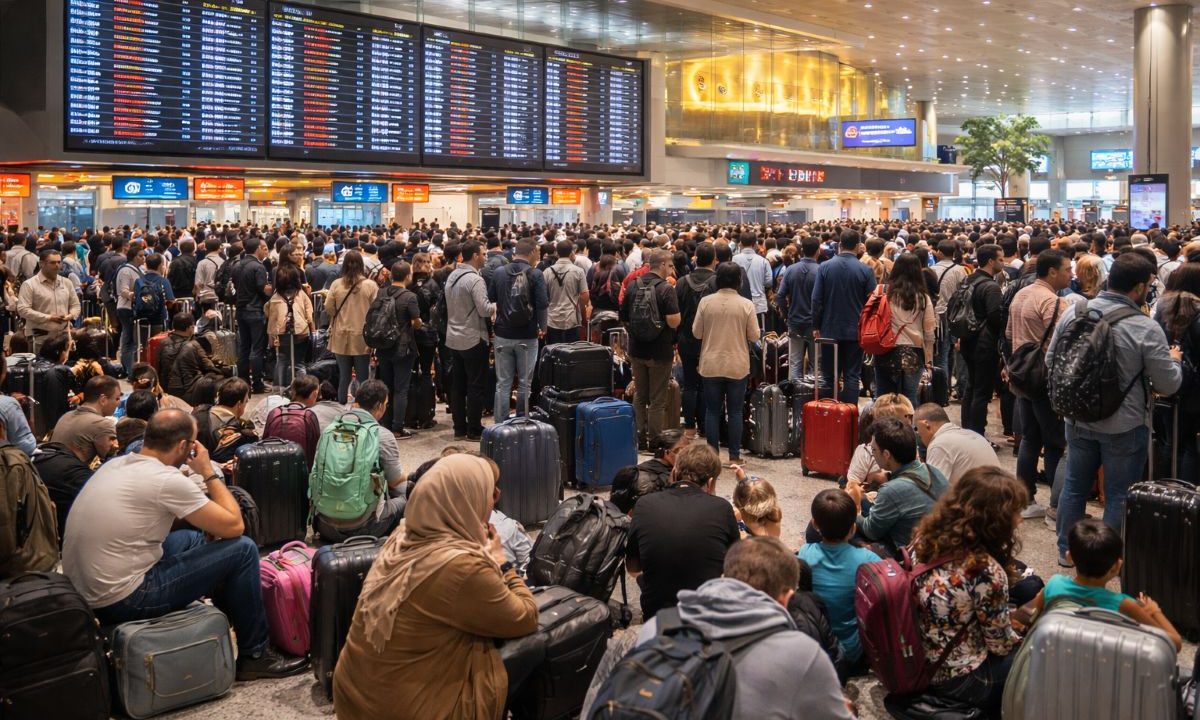
Fatima Al-Rashid was supposed to be home in Manama by now, tucking her twin daughters into bed after a three-day business trip to Dubai. Instead, she’s been sleeping on an airport bench for the past 18 hours, watching departure boards flash “CANCELLED” in red letters.

“I’ve never seen anything like this,” she tells another stranded passenger, her phone battery dying as she tries to explain to her family why mommy isn’t coming home tonight. “They said maybe tomorrow, but honestly? Nobody knows.”
Fatima isn’t alone. Across seven major airports in the Middle East, thousands of travelers are facing the same nightmare as Gulf Air’s massive flight cancellations continue to ripple through the region’s aviation network.
Gulf Air’s Crisis Deepens Across the Middle East
The situation has spiraled far beyond a typical airline disruption. Gulf Air has cancelled 121 flights, creating a domino effect that’s paralyzing air travel from the UAE to Saudi Arabia and beyond.
What started as operational difficulties has now become a full-blown travel crisis affecting major hubs including Dubai International, Hamad International in Doha, King Abdulaziz International in Jeddah, and King Fahd International in Dammam.

The scale of these cancellations is unprecedented for Gulf Air. We’re seeing disruptions that will take days, possibly weeks, to fully resolve.
— Ahmed Hassan, Aviation Industry Analyst

The airline, Bahrain’s national carrier, has been struggling with a combination of factors that industry insiders say caught management completely off guard. Technical issues, crew shortages, and operational bottlenecks have created a perfect storm.
Airport terminals across the region have transformed into makeshift camps. Families with young children are sprawled across seating areas, business travelers are conducting meetings via phone from departure lounges, and elderly passengers are seeking medical attention after hours of uncertainty.

Where the Chaos is Hitting Hardest
The cancellations aren’t random – they’re concentrated on Gulf Air’s most critical routes, the ones that connect business hubs and carry thousands of passengers daily.
| Airport | Cancelled Flights | Passengers Affected | Status |
|---|---|---|---|
| Dubai International | 28 | 4,200+ | Severe delays |
| Hamad International (Doha) | 22 | 3,300+ | Limited rebooking |
| King Abdulaziz (Jeddah) | 19 | 2,850+ | Emergency accommodations |
| King Khalid (Riyadh) | 18 | 2,700+ | Partial operations |
| Abu Dhabi International | 16 | 2,400+ | Rebooking chaos |
| Bahrain International | 12 | 1,800+ | Home base struggles |
| King Fahd (Dammam) | 6 | 900+ | Minimal service |
The numbers tell only part of the story. Behind each cancelled flight are real people with real problems: missed business deals, family emergencies, medical appointments, and weddings.
Kuwait International Airport, while not directly hit by Gulf Air cancellations, is experiencing overflow effects as desperate passengers try to find alternative routes through Kuwait Airways and other carriers.
We’re seeing people willing to pay triple the normal fare just to get home. The secondary market for tickets has gone completely insane.
— Layla Mahmoud, Travel Agent in Dubai
Oman’s Muscat International Airport has become an unexpected beneficiary, with some travelers routing through Muscat to reach their final destinations. But even alternative carriers are struggling to accommodate the sudden surge in demand.
What This Means for Your Travel Plans
If you’re planning to travel in the region over the next few weeks, here’s what you need to know right now.
First, Gulf Air isn’t offering clear timelines for when normal operations will resume. The airline’s customer service lines are overwhelmed, and their rebooking system has crashed multiple times since the crisis began.
- Check your flight status every few hours, not just once a day
- Consider booking backup flights on other airlines if your travel is urgent
- Document all extra expenses – hotels, meals, alternative transportation
- Screenshot your original booking confirmations before they potentially disappear from systems
- Arrive at airports with extra time, even for flights with other airlines
The ripple effects are hitting other carriers too. Emirates, Qatar Airways, and Saudia are all reporting higher than normal passenger volumes as people scramble for alternatives.
What we’re seeing is a classic case of how one airline’s problems can destabilize an entire regional network. The Middle East aviation system is more interconnected than most people realize.
— Dr. Sarah Al-Kuwari, Transportation Economics Professor
Business travelers are particularly frustrated because many of the cancelled routes connect major commercial centers. The Dubai-Bahrain corridor alone handles millions of dollars in daily business travel.
Hotels near affected airports are reporting full bookings, with some charging premium rates for stranded passengers. Airport sleeping has become so common that several terminals have set up additional charging stations and temporary rest areas.
The Bigger Picture Behind the Crisis
This isn’t just about one airline having a bad week. Industry experts are pointing to deeper structural problems that have been building for months.
Gulf Air has been operating with thin margins on crew scheduling, meaning any disruption creates cascading delays. The airline also relies heavily on older aircraft that require more maintenance – and when maintenance schedules get disrupted, the problems multiply quickly.
Regional aviation authorities are now scrambling to coordinate response efforts, but the damage to traveler confidence may take much longer to repair.
Airlines in this region need to learn from this crisis. Passengers have options, and loyalty disappears quickly when you strand people for days without clear communication.
— Omar Al-Zahra, Former Airline Operations Manager
The timing couldn’t be worse, with the region entering peak business travel season. Many companies are already exploring alternative airlines for their corporate travel programs.
For now, thousands of passengers remain in limbo, hoping that tomorrow brings better news. But as Fatima Al-Rashid learned, in this crisis, hope and reality don’t always align.
FAQs
How long will Gulf Air’s flight cancellations continue?
Gulf Air hasn’t provided a clear timeline, but industry experts expect disruptions to continue for at least another week as the airline works through operational issues and crew scheduling problems.
Can I get a refund for my cancelled Gulf Air flight?
Yes, you’re entitled to a full refund for cancelled flights, but Gulf Air’s customer service is overwhelmed. Document everything and be prepared to wait several weeks for processing.
Should I book alternative flights on other airlines?
If your travel is urgent, yes. Other Middle Eastern carriers are experiencing high demand, so book quickly and expect to pay premium prices.
Are other airlines affected by this crisis?
While other airlines aren’t cancelling flights, they’re dealing with overflow passengers and higher demand, which may cause delays and limited availability.
What compensation am I entitled to for being stranded?
Compensation varies by route and local regulations, but you should keep receipts for meals, accommodation, and transportation. Gulf Air is responsible for reasonable expenses during extended delays.
Which airports are handling the crisis best?
Dubai and Doha airports have set up better temporary accommodations for stranded passengers, while smaller airports like Dammam have limited facilities for extended stays.
Leave a Reply