
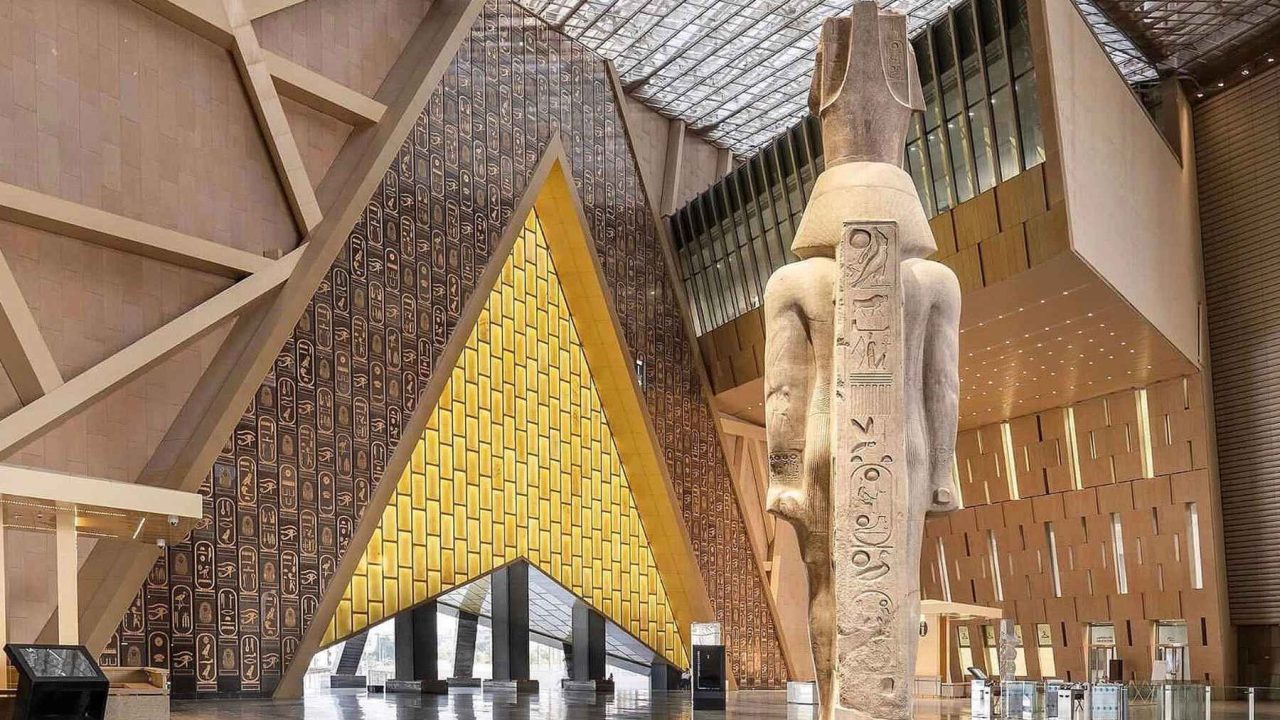
Amira Hassan had been waiting her entire career for this moment. As a 58-year-old Egyptologist who spent decades carefully cataloging artifacts in cramped storage rooms, she never imagined she’d witness the opening of something this magnificent. “My grandmother used to tell me stories about the pharaohs,” she whispered to her colleague as they stood before the towering entrance. “She always said they deserved a palace, not a basement.”

After two decades of construction delays, budget overruns, and countless setbacks, Egypt has finally opened the doors to the Grand Egyptian Museum. This isn’t just another tourist attraction—it’s the world’s largest museum dedicated to a single civilization, and it’s about to change how we experience ancient Egypt forever.
The numbers alone are staggering. More than $1 billion invested. Over 100,000 artifacts on display. Twenty years in the making. But behind these figures lies something much more profound: the fulfillment of a promise to give ancient Egyptian civilization the showcase it has always deserved.

A Museum That Redefines Everything We Know About Ancient Egypt
Located just two kilometers from the Giza pyramids, the Grand Egyptian Museum spans over 120 acres and houses the most comprehensive collection of ancient Egyptian artifacts ever assembled under one roof. The museum’s crown jewel? The complete collection of Tutankhamun’s treasures—all 5,398 pieces displayed together for the first time in history.
What makes this museum revolutionary isn’t just its size, but how it tells the story of ancient Egypt. Instead of cramming artifacts into small spaces, curators have created immersive experiences that transport visitors back in time.

“We’re not just displaying objects—we’re bringing an entire civilization back to life. Every piece has been positioned to tell part of a larger story that spans over 3,000 years.”
— Dr. Mostafa Waziri, Secretary-General of Egypt’s Supreme Council of Antiquities

The museum features state-of-the-art conservation labs where visitors can watch experts restore ancient artifacts in real-time. Interactive displays use cutting-edge technology to show how pyramids were built, how mummies were prepared, and how daily life unfolded along the Nile River thousands of years ago.
What You’ll Find Inside This Archaeological Wonder
The Grand Egyptian Museum houses treasures that have never been publicly displayed before. Here’s what makes this collection extraordinary:

- Tutankhamun’s complete burial collection: Including his famous golden mask, chariots, jewelry, and personal belongings
- Royal mummies: Preserved remains of pharaohs and queens with detailed explanations of mummification processes
- Monumental statues: Colossal sculptures that were too large for the old Egyptian Museum
- Interactive archaeological sites: Reconstructed tombs and temples you can walk through
- Ancient Egyptian daily life exhibits: Tools, clothing, food, and household items showing how ordinary people lived
| Museum Section | Key Highlights | Estimated Visit Time |
|---|---|---|
| Tutankhamun Galleries | Complete tomb collection, golden mask | 2-3 hours |
| Royal Mummies Hall | Preserved pharaohs, mummification displays | 1-2 hours |
| Grand Staircase | Monumental statues, pyramid views | 30-45 minutes |
| Ancient Life Galleries | Daily life artifacts, interactive displays | 1-2 hours |
| Conservation Labs | Live restoration work, scientific processes | 45 minutes |
The museum’s design itself tells a story. The building’s triangular shape echoes the nearby pyramids, while its glass facade offers breathtaking views of the Giza plateau. At sunset, visitors can watch the ancient monuments glow golden while surrounded by the treasures of the pharaohs who built them.
“Standing in this museum feels like time travel. You’re literally surrounded by objects that were touched by people who lived 4,000 years ago, and outside the window, you can see the monuments they built.”
— Sarah Johnson, Archaeological Tourism Specialist
Why This Opening Changes Everything for Egypt and Tourism
The Grand Egyptian Museum’s opening comes at a crucial time for Egypt’s economy and cultural preservation efforts. Tourism, which accounts for nearly 12% of Egypt’s GDP, has faced significant challenges in recent years. This museum represents a massive bet on cultural tourism’s future.
For decades, many of Egypt’s most precious artifacts were stored in overcrowded facilities or scattered across different locations. The old Egyptian Museum in Cairo, built in 1902, simply couldn’t accommodate the growing collection or provide adequate conservation conditions.
Now, for the first time, researchers and visitors can see the complete picture of ancient Egyptian civilization in one location. This consolidation has already led to new archaeological discoveries and insights about how different periods of Egyptian history connected.
“We’re seeing connections between artifacts that were never possible before. When you can display objects from the same tomb together, or show how artistic styles evolved across centuries, entirely new stories emerge.”
— Dr. Tarek Tawfik, Former Director of the Grand Egyptian Museum
The museum is expected to attract over 8 million visitors annually, making it one of the world’s most visited cultural sites. Local communities around Giza are already seeing economic benefits from increased tourism, with new hotels, restaurants, and tour services opening to accommodate the influx of visitors.
Beyond tourism, the museum serves as a world-class research facility. Its advanced laboratories and storage systems meet international standards for artifact preservation, ensuring these treasures will be protected for future generations.
Planning Your Visit to This Archaeological Marvel
The Grand Egyptian Museum operates on a timed entry system to manage crowds and ensure everyone gets the full experience. Advanced booking is strongly recommended, especially for the Tutankhamun galleries, which require separate tickets.
The museum offers various ticket options, from basic admission to premium experiences that include guided tours and special access to restricted areas. Audio guides are available in multiple languages, and the museum’s app provides interactive maps and detailed information about exhibits.
“This isn’t a museum you rush through in an afternoon. Plan for a full day, wear comfortable shoes, and prepare to be amazed. Every corner reveals something that will change how you think about ancient Egypt.”
— Ahmed Farouk, Licensed Egyptian Tour Guide
The museum also features restaurants, gift shops, and rest areas designed to handle large crowds comfortably. Special programs for children and families make it accessible to visitors of all ages.
After twenty years of anticipation, the Grand Egyptian Museum has finally opened its doors to reveal the complete story of one of humanity’s greatest civilizations. It’s not just a museum—it’s a portal to the past that promises to inspire wonder and discovery for generations to come.
FAQs
How much does it cost to visit the Grand Egyptian Museum?
Basic admission starts around $15 for international visitors, with additional fees for special galleries like Tutankhamun’s treasures.
Do I need to book tickets in advance?
Yes, advance booking is highly recommended, especially during peak tourist seasons and for special exhibitions.
How long should I plan to spend at the museum?
A full day is recommended to see all major sections, though you could spend 4-5 hours if focusing on highlights.
Is the museum suitable for children?
Absolutely! The museum offers interactive displays and special programs designed for families and young visitors.
Can I take photos inside the museum?
Photography is allowed in most areas, but some special galleries may have restrictions. Check current policies when visiting.
What’s the best time to visit?
Early morning or late afternoon visits offer cooler temperatures and potentially smaller crowds, plus better lighting for pyramid views.

Leave a Reply