
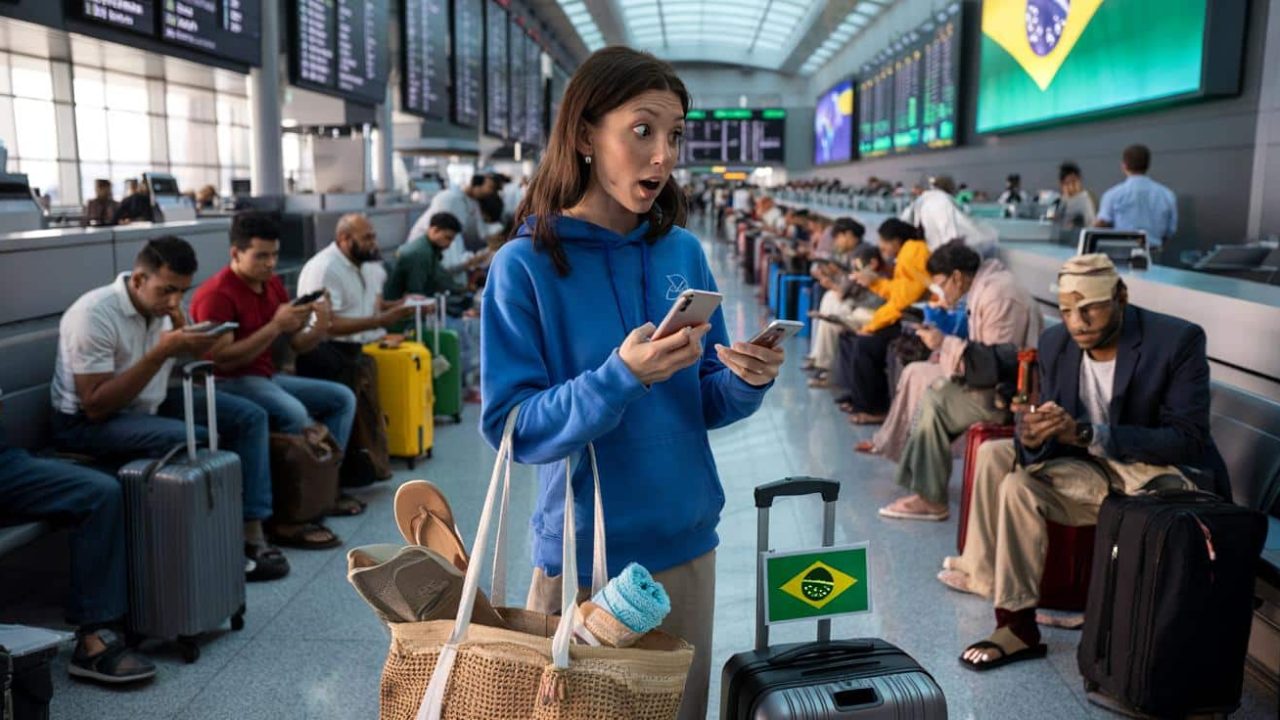
Liam adjusted his backpack straps as he stood in the immigration line at São Paulo’s Guarulhos Airport, exhausted from his 11-hour flight from Toronto. The 28-year-old software developer had planned this spontaneous South American adventure just like his previous trips to Brazil – no visa required, just his Canadian passport and a sense of wanderlust.
But as he approached the immigration counter, the officer’s words hit him like cold water: “Sir, you need a visa to enter Brazil now.” Liam’s heart sank as he realized he was among thousands of travelers caught off guard by Brazil’s sudden policy shift.
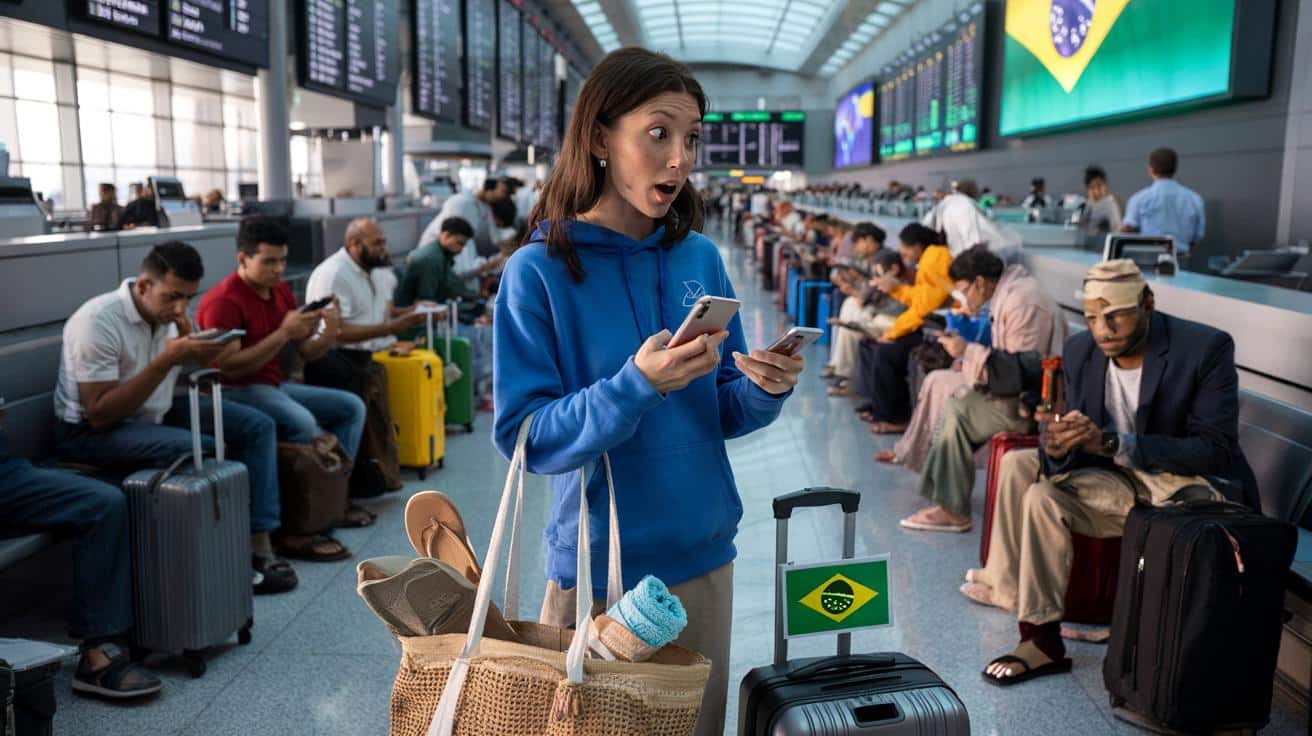
This scene is playing out across Brazilian airports as the country implements a major change that affects millions of potential visitors from North America and beyond.
Brazil Ends the Visa-Free Era for Major Countries
Brazil has officially ended visa-free travel for citizens of the United States and Canada, adding these North American nations to a growing list of countries whose citizens now need advance authorization to visit. This marks a dramatic shift in Brazil’s tourism policy and signals a move toward stricter reciprocity in international travel arrangements.
The policy change puts the US and Canada in the same category as India, Saudi Arabia, Cuba, Egypt, Kenya, Pakistan, and Oman – all countries whose citizens have long required visas for Brazilian entry. What makes this particularly significant is that it affects two of Brazil’s largest sources of international tourists.
This isn’t just about paperwork – it’s about Brazil asserting its position on equal treatment in international relations. If Brazilian citizens need visas to visit these countries, why shouldn’t the reverse be true?
— Dr. Maria Santos, International Relations Professor, University of São Paulo
The timing couldn’t be more impactful. Brazil had temporarily suspended visa requirements for US and Canadian citizens in recent years to boost tourism, especially around major events like the Olympics and World Cup. Now, that era of easy access has come to an abrupt end.
What This Means for Travelers Right Now
If you’re planning a trip to Brazil from any of the affected countries, here’s what you need to know immediately:
Visa Requirements by Country:
| Country | Visa Required | Processing Time | Approximate Cost |
|---|---|---|---|
| United States | Yes | 5-10 business days | $80-160 |
| Canada | Yes | 5-10 business days | $80-160 |
| India | Yes | 10-15 business days | $40-80 |
| Saudi Arabia | Yes | 7-14 business days | $60-120 |
| Cuba | Yes | 10-20 business days | $40-80 |
| Egypt | Yes | 7-14 business days | $40-80 |
Key Changes Include:
- Electronic visa applications required for all affected countries
- Processing times ranging from 5-20 business days depending on nationality
- Fees varying from $40-160 based on reciprocity agreements
- Additional documentation requirements including proof of accommodation and return flights
- No more spontaneous trips – advance planning now mandatory
We’re seeing a 40% drop in last-minute bookings from North America since the announcement. People just aren’t prepared for the visa requirement yet.
— Carlos Rodriguez, Travel Industry Analyst
The Brazilian government has established an online portal for visa applications, but early reports suggest the system is overwhelmed with requests. Many travelers are experiencing delays beyond the advertised processing times.
The Ripple Effect Across Tourism and Business
This policy shift extends far beyond individual vacation plans. The tourism industry, which relies heavily on North American visitors, is bracing for significant impacts. Hotels, tour operators, and airlines are all adjusting their strategies and expectations.
Business travelers face particular challenges. The days of hopping on a plane for a quick business meeting in São Paulo or Rio de Janeiro are over for American and Canadian executives. Companies now need to factor visa processing time into their international business planning.
Our corporate clients are having to completely restructure their South American business trips. What used to be a week’s notice is now a month’s planning process.
— Jennifer Walsh, Corporate Travel Manager
The change also affects Brazilian communities abroad. Brazilian-Americans and Brazilian-Canadians who frequently travel back to visit family now face additional bureaucratic hurdles, even if they hold dual citizenship in some cases.
Industries Most Affected:
- Tourism and hospitality sectors
- International business and consulting
- Academic exchanges and conferences
- Family visit travel
- Adventure and eco-tourism
Airlines are reporting cancellations and rebookings as travelers scramble to either obtain visas quickly or postpone their trips. Some are redirecting their South American travel to countries like Colombia or Peru, which still offer visa-free access to North Americans.
Why Brazil Made This Move
The decision reflects Brazil’s broader foreign policy strategy of demanding reciprocal treatment from other nations. Brazilian citizens have long faced visa requirements and lengthy processing times when traveling to the United States and Canada, creating what many saw as an unfair imbalance.
From Brazil’s perspective, this move levels the playing field. If American and Canadian citizens want easy access to Brazil, their governments should offer the same courtesy to Brazilian travelers.
This is diplomacy through tourism policy. Brazil is sending a clear message that international travel should be a two-way street with equal treatment for all.
— Ambassador Ricardo Mendes, Former Brazilian Diplomatic Corps
The timing also coincides with Brazil’s efforts to strengthen relationships with other emerging economies while taking a more assertive stance with traditional Western partners.
What Travelers Should Do Now
If you’re affected by these changes, don’t panic – but do act quickly. The visa application process, while more complex than before, is still manageable with proper planning.
Start your application at least three weeks before your planned travel date. Gather all required documents including proof of accommodation, return flights, and financial means. The Brazilian consulates are working to streamline the process, but demand is high.
Consider travel insurance that covers trip cancellations due to visa delays. Many travelers are discovering this coverage can be invaluable when dealing with processing uncertainties.
For frequent travelers to Brazil, look into multi-entry visas that can provide longer validity periods, potentially saving time and money on future trips.
FAQs
Do I need a visa if I’m just transiting through Brazil?
Generally no, but check with your airline as some transit situations may require visas depending on layover length and airport facilities.
Can I get a visa on arrival in Brazil?
No, all affected nationalities must obtain visas before traveling. There are no visa-on-arrival options currently available.
How long are the new visas valid?
Tourist visas are typically valid for 90 days within a one-year period, but this can vary by nationality and visa type.
What if I have a trip booked for next week?
Contact the Brazilian consulate immediately about expedited processing, though this may incur additional fees and isn’t guaranteed.
Are there any exceptions to the visa requirement?
Diplomatic passport holders and some specific business categories may have exceptions, but regular tourists and business travelers need visas.
Will this policy change again soon?
Brazilian officials haven’t indicated any plans to reverse this decision. The policy appears to be a long-term strategic shift rather than a temporary measure.

Leave a Reply