
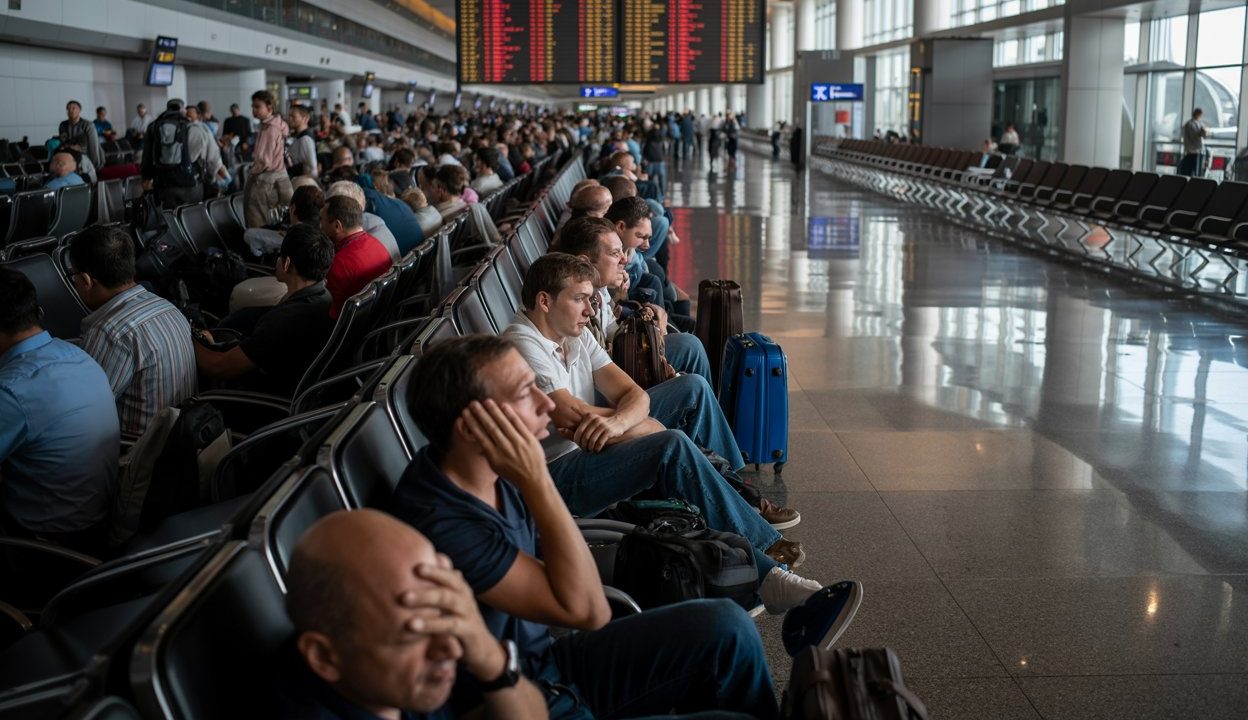
Zara Khalil clutched her boarding pass, watching the departure board at Bahrain International Airport with growing disbelief. Her flight to London – scheduled for 10:30 AM – had just switched from “Boarding” to “Cancelled” in bold red letters.

“This can’t be happening,” she whispered to her husband over the phone. “The wedding is tomorrow. My sister is getting married tomorrow.”
Around her, hundreds of other passengers stared at their phones, frantically trying to rebook flights that simply weren’t available. The airport’s usual buzz had turned into something closer to controlled chaos.

When Major Airlines Hit the Brakes Simultaneously
What Zara experienced wasn’t an isolated incident. Bahrain International Airport became the epicenter of massive travel disruption as over 200 flights were cancelled across multiple major carriers, including Gulf Air, Qatar Airways, and several other regional airlines.
The cancellations didn’t discriminate. Popular routes to London, Dubai, Riyadh, Jeddah, Delhi, Mumbai, and Singapore were all affected, leaving thousands of passengers stranded or scrambling for alternatives.
We’re seeing unprecedented coordination in flight cancellations across the Gulf region. This isn’t just weather-related – there are deeper operational challenges at play.
— Ahmed Al-Rashid, Aviation Industry Analyst

The ripple effects spread far beyond Bahrain’s borders. Connecting flights in major hubs like Dubai and Doha faced delays as passengers missed their connections. Hotels near the airport quickly filled up with stranded travelers.
Breaking Down the Flight Cancellation Crisis
The scope of this disruption becomes clearer when you look at the numbers. Here’s what travelers are dealing with:

| Airline | Cancelled Flights | Most Affected Routes |
|---|---|---|
| Gulf Air | 85+ | London, Dubai, Mumbai |
| Qatar Airways | 45+ | Singapore, Delhi, Jeddah |
| Other Carriers | 70+ | Regional destinations |
The cancelled routes tell a story of disrupted business and personal travel across multiple continents:
- London and European destinations: Business travelers and tourists caught in the middle of peak travel season
- Dubai and UAE routes: Critical connecting flights to North America and Australia affected
- Saudi Arabia (Riyadh, Jeddah): Religious pilgrims and business travelers stranded
- Indian subcontinent (Delhi, Mumbai): Large expatriate communities unable to travel home
- Singapore: Major Asia-Pacific business hub connections severed
We’ve had to activate our emergency accommodation protocols. The scale of this disruption requires coordinated response from all airport stakeholders.
— Sarah Mitchell, Airport Operations Director
The Human Cost of Grounded Dreams
Behind every cancelled flight is a story. Business deals falling through. Family reunions postponed. Medical appointments missed. Honeymoons delayed.
The expatriate community in Bahrain, which makes up a significant portion of the population, has been hit particularly hard. Many were traveling home for festivals, family emergencies, or long-planned vacations.
Hotels in Manama reported being fully booked within hours of the cancellations. Car rental agencies ran out of vehicles as people sought alternative ways to reach nearby airports in Saudi Arabia or the UAE.
I’ve been in this business for 20 years, and I’ve never seen anything quite like this. The coordination required to manage this many cancellations simultaneously suggests this was a planned operational decision, not a sudden crisis.
— Captain Mohamed Hassan, Former Gulf Air Pilot
What’s Really Behind the Chaos?
While official statements cite “operational requirements” and “scheduling adjustments,” industry insiders point to several potential factors:
- Air traffic control restrictions: Possible limitations on flights through certain airspace
- Aircraft maintenance issues: Fleet-wide inspections or repairs
- Crew availability: Pilot or cabin crew shortages affecting multiple airlines
- Fuel supply concerns: Regional supply chain disruptions
- Regulatory compliance: New safety or security requirements
The timing couldn’t be worse. Peak travel season means alternative flights are scarce and expensive. Many passengers face waits of several days before they can secure new bookings.
Finding Your Way Through the Travel Maze
For passengers caught in this disruption, here’s what travel experts recommend:
- Contact your airline immediately for rebooking options
- Check for available flights from neighboring airports in Dubai, Kuwait, or Doha
- Document all expenses for potential compensation claims
- Consider travel insurance coverage for accommodation and meal costs
- Join airline social media channels for real-time updates
Passengers should know their rights. EU regulations, for instance, provide compensation for significant delays and cancellations, regardless of where the airline is based.
— Lisa Thompson, Consumer Travel Rights Advocate
The situation remains fluid, with airlines promising updates every few hours. Some flights have been rescheduled for later in the week, while others remain indefinitely postponed.
This crisis highlights the interconnected nature of modern air travel. When one major hub experiences problems, the effects cascade across continents, affecting business, tourism, and personal lives in ways that extend far beyond simple schedule changes.
FAQs
How long are the flight cancellations expected to last?
Airlines haven’t provided a definitive timeline, but most are suggesting the disruption could continue for several days.
Will passengers receive compensation for cancelled flights?
Compensation depends on your airline, route, and local regulations. EU routes typically offer stronger passenger protections.
Are there alternative airports passengers can use?
Dubai, Kuwait, and Doha airports are the closest alternatives, though availability is limited during peak season.
Should travelers avoid booking flights through Bahrain right now?
It’s advisable to monitor the situation closely and consider flexible booking options if travel is essential.
What should passengers do if they’re stranded at the airport?
Contact your airline for accommodation assistance, keep all receipts, and check if your travel insurance covers unexpected delays.
Are cargo and freight flights also affected?
Some cargo operations have experienced delays, but the impact appears less severe than passenger services.

Leave a Reply