
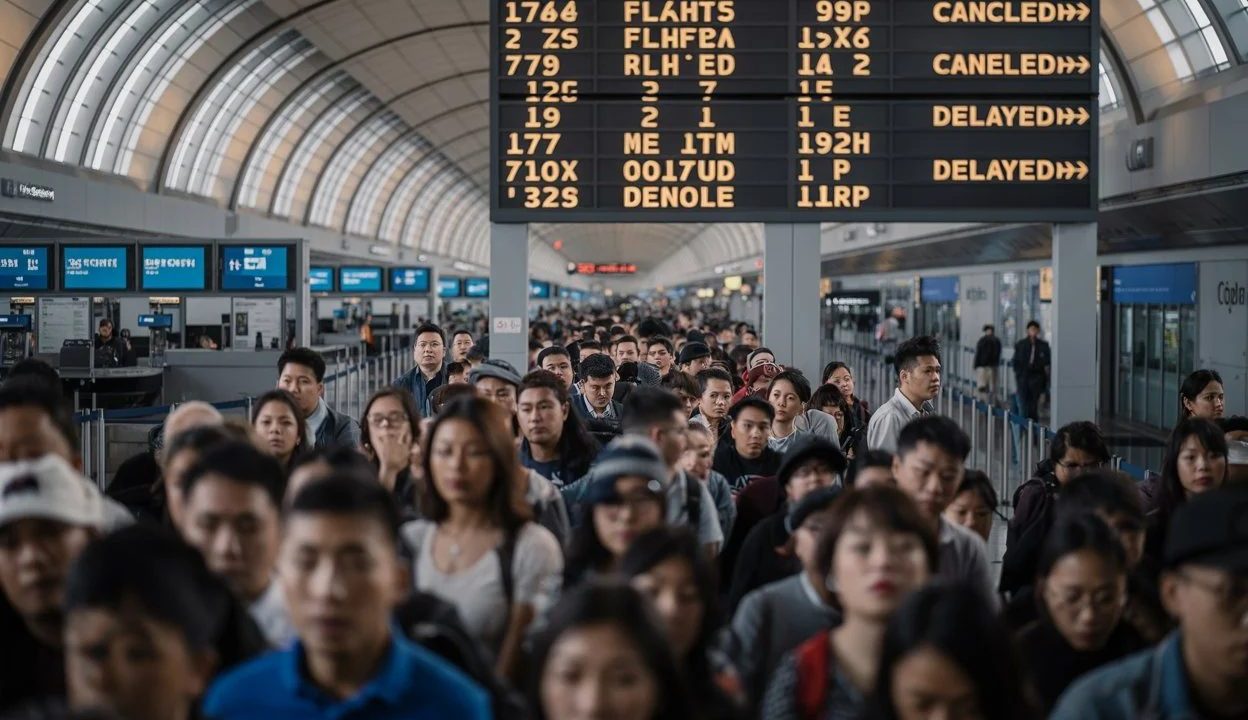
Marcus Rivera had been waiting at Gate B12 for three hours, watching the departure board cycle through delay after delay. His connecting flight to Dallas—originally scheduled for 2:30 PM—now showed “DELAYED” in stark red letters with no updated time. Around him, frustrated passengers clutched their phones, desperately trying to reach customer service representatives who seemed as overwhelmed as everyone else.

“I’ve never seen anything like this,” Marcus muttered to the woman sitting next to him, who was frantically rebooking her Miami flight for the third time that afternoon. “It’s like the entire airport just… stopped.”
Marcus wasn’t alone in his frustration. Across Hartsfield-Jackson Atlanta International Airport, hundreds of passengers found themselves stranded as a massive wave of flight disruptions swept through one of America’s busiest travel hubs.

When America’s Busiest Airport Grinds to a Halt
Hartsfield-Jackson Atlanta International Airport experienced one of its most challenging operational days in recent memory, with 532 flights delayed and 23 completely canceled. The disruptions created a ripple effect that stretched across the country, impacting travelers heading to major destinations including New York, Miami, Dallas, and Los Angeles.
The chaos wasn’t limited to a single airline. Delta Air Lines, which operates its largest hub at Atlanta, bore the brunt of the disruptions, but American Airlines, Southwest, and United also saw significant impacts to their schedules. Passengers who had planned quick layovers found themselves camping out in terminal chairs, while others missed important business meetings, family gatherings, and vacation plans.
This kind of widespread disruption at Atlanta creates problems nationwide because of how central the airport is to our air travel system. When Atlanta sneezes, the whole country catches a cold.
— Jennifer Walsh, Aviation Industry Analyst

The timing couldn’t have been worse. Atlanta serves as a critical connection point for travelers across the Southeast and beyond, handling over 100 million passengers annually. When operations falter here, the effects cascade through the entire national air travel network.
Breaking Down the Numbers: What Travelers Faced
The scale of disruption painted a clear picture of just how challenging the day became for both airlines and passengers. Here’s what the numbers revealed:

| Airline | Flights Delayed | Flights Canceled | Most Affected Routes |
|---|---|---|---|
| Delta Air Lines | 312 | 15 | New York, Los Angeles, Miami |
| American Airlines | 98 | 4 | Dallas, Charlotte, Phoenix |
| Southwest Airlines | 76 | 3 | Chicago, Denver, Las Vegas |
| United Airlines | 46 | 1 | Houston, San Francisco, Newark |
The disruptions affected flights across all major route categories:
- East Coast Connections: Flights to New York’s LaGuardia and JFK airports saw average delays of 2.5 hours
- West Coast Routes: Los Angeles and San Francisco-bound flights experienced the highest cancellation rates
- Southern Hubs: Dallas and Miami routes faced significant rebooking challenges due to limited alternative flights
- International Connections: Passengers connecting to overseas flights missed crucial departure windows
We’re working around the clock to get passengers to their destinations, but when you have this many delayed aircraft out of position, it creates a domino effect that takes hours to resolve.
— Robert Chen, Airport Operations Specialist
The passenger experience varied dramatically depending on destination and airline. Some travelers faced relatively minor inconveniences with delays under two hours, while others found themselves rebooked on flights departing the following day.
Real Stories from the Terminal Chaos
Beyond the statistics, real people faced real consequences. Business travelers missed crucial presentations, families saw vacation plans crumble, and students struggled to return to college campuses across the country.
The airport’s customer service desks became overwhelmed as passengers sought rebooking options, hotel accommodations, and meal vouchers. Long lines snaked through terminals as airline representatives worked to manage the crisis one passenger at a time.
I’ve been traveling for business for fifteen years, and I’ve never seen passenger frustration levels this high. People were understanding at first, but after four or five hours, patience runs thin.
— Amanda Foster, Frequent Business Traveler
Social media platforms filled with photos and videos of crowded gate areas, passengers sleeping on airport floors, and families trying to keep children entertained during extended waits. The hashtag #AtlantaAirportChaos began trending as travelers shared their experiences in real-time.
For many passengers, the disruption meant more than just inconvenience. Medical appointments were missed, job interviews were postponed, and family celebrations went on without loved ones who couldn’t reach their destinations.
What This Means for Future Travel Plans
The Atlanta airport disruptions serve as a stark reminder of how interconnected our air travel system has become. When a major hub experiences problems, the effects ripple outward, touching travelers across the country who may never have planned to visit Atlanta.
Airlines are now working to reposition aircraft and crews to restore normal operations, but the recovery process typically takes 24 to 48 hours after major disruptions end. Passengers with upcoming travel plans through Atlanta should monitor their flight status closely and consider flexible rebooking options.
Events like this highlight why travelers need to build buffer time into their schedules, especially when connecting through major hubs like Atlanta. The convenience of hub-and-spoke systems comes with inherent risks.
— David Martinez, Travel Industry Consultant
The disruptions also underscore the importance of travel insurance and flexible booking policies. Passengers who had purchased trip protection or booked with airlines offering generous rebooking policies found themselves better positioned to manage the chaos.
Looking ahead, this incident will likely prompt discussions about airport capacity, airline scheduling practices, and passenger rights during major disruptions. The aviation industry continues to grapple with balancing efficiency with resilience in an increasingly complex travel environment.
FAQs
What caused the massive flight delays at Atlanta airport?
While specific causes weren’t immediately disclosed, such widespread disruptions typically result from weather conditions, air traffic control issues, or technical problems affecting multiple airlines simultaneously.
Are passengers entitled to compensation for these delays?
Compensation depends on the cause of delays and individual airline policies. Weather-related delays typically don’t qualify for monetary compensation, but airlines often provide meal vouchers and hotel accommodations for extended delays.
How long does it take for operations to return to normal after such disruptions?
Major hub disruptions usually require 24-48 hours for full recovery as airlines work to reposition aircraft and crews back to their scheduled rotations.
Should travelers avoid booking connections through Atlanta in the future?
Atlanta remains one of the world’s most efficient airports despite occasional disruptions. Travelers should allow adequate connection time and consider travel insurance for important trips.
What can passengers do to protect themselves from similar situations?
Book morning flights when possible, allow longer connection times, purchase travel insurance, and join airline loyalty programs that offer rebooking priority during disruptions.
How do Atlanta airport disruptions affect flights nationwide?
As one of America’s busiest connection hubs, Atlanta disruptions create cascading delays across the country as passengers miss connections and aircraft fall out of scheduled rotations.
Leave a Reply