
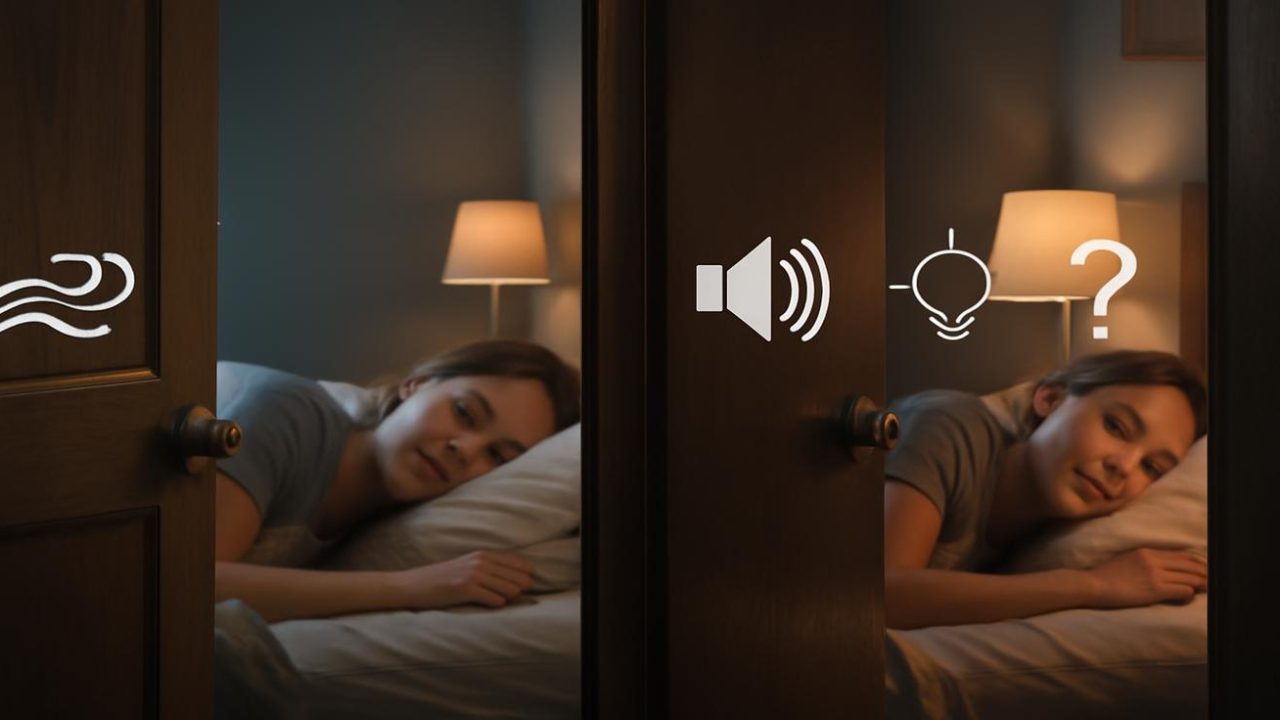
At 2:47 AM, retired teacher Delores Hartwell jolted awake in her Sacramento home, gasping for air. The stuffy bedroom felt like a sealed tomb, and she found herself stumbling toward the door, desperate for relief. “I thought I was having some kind of panic attack,” she recalls. “But when I cracked that door open, I could breathe again within minutes.”
What Delores discovered accidentally is now backed by sleep science: keeping your bedroom door open might be the simplest trick to improve your sleep quality. But like most things that sound too good to be true, this sleep hack comes with its own set of trade-offs that have experts divided.
The debate centers on a fascinating biological reality – the air you breathe while sleeping directly impacts how well your brain and body recover each night.
The Science Behind Better Sleep Through Better Air
Every breath you take removes oxygen from your bedroom and adds carbon dioxide back into the air. In a closed bedroom, these CO2 levels can climb surprisingly high, leaving you feeling groggy and unrested even after eight hours of sleep.
Dr. Marcel Hungs, a sleep specialist at UC San Diego, explains the connection: “When carbon dioxide builds up in your sleeping space, it can fragment your sleep cycles and prevent you from reaching the deeper, more restorative stages of sleep.”
Higher CO2 levels don’t just make you feel stuffy – they actually signal your brain to stay in lighter sleep phases, which means less recovery time for your body and mind.
— Dr. Marcel Hungs, Sleep Medicine Specialist
Research from the Technical University of Denmark found that CO2 concentrations in bedrooms often reach levels that measurably impact sleep quality. The study showed that better ventilation led to fewer sleep disruptions and improved next-day cognitive performance.
Opening your bedroom door creates a simple ventilation system, allowing fresh air to circulate and carbon dioxide to disperse throughout your home rather than concentrating around your sleeping area.
The Real Benefits and Hidden Costs
The advantages of sleeping with your door open extend beyond just air quality, but they come with genuine drawbacks that vary depending on your living situation.
| Benefits | Potential Drawbacks |
|---|---|
| Lower CO2 levels | Increased noise exposure |
| Better air circulation | Light pollution from hallways |
| More consistent room temperature | Reduced privacy and security |
| Faster emergency exit access | Pet disturbances |
| Reduced stuffiness and odors | Higher heating/cooling costs |
Sleep consultant Rebecca Robbins from Harvard Medical School points out a crucial consideration: “The quality of air circulation matters more than whether your door is open or closed. If opening your door means letting in noise from a busy street or light from electronic devices, you might be trading one sleep disruptor for another.”
The noise factor is particularly significant for light sleepers. Sounds from other parts of your home – refrigerator cycling, HVAC systems, family members moving around – can fragment your sleep just as much as poor air quality.
Who Should Keep Their Door Open (And Who Shouldn’t)
Your living situation largely determines whether this sleep strategy will help or hurt your rest quality.
Good candidates for open-door sleeping include:
- People living in quiet homes or apartments
- Those with bedrooms that feel stuffy or poorly ventilated
- Anyone who wakes up feeling unrested despite adequate sleep time
- Individuals living alone or with considerate household members
- Light sleepers who aren’t bothered by minimal ambient noise
People who should probably keep doors closed:
- Anyone living near busy roads or in noisy neighborhoods
- Shift workers who sleep during daytime hours
- Parents with young children who wake frequently
- Those with pets that might disturb sleep
- People prioritizing home security or privacy
The goal is optimizing your personal sleep environment. For some people, that means prioritizing air quality over noise control. For others, it’s the opposite.
— Rebecca Robbins, Sleep Researcher
Fire safety expert Captain James Rodriguez adds another perspective: “From an emergency standpoint, sleeping with your door closed can actually provide crucial protection. Closed doors slow fire and smoke spread, giving you more time to escape safely.”
Alternative Solutions for Better Bedroom Air
If opening your door isn’t practical, several other strategies can improve your bedroom’s air quality without sacrificing quiet or security.
Installing a small fan near your bedroom door can create air circulation even when the door remains closed. Window fans work similarly, though they’re not ideal for ground-floor bedrooms in urban areas.
Air purifiers with built-in fans serve double duty, cleaning your air while promoting circulation. Some newer models specifically target CO2 reduction, though they’re more expensive than basic ventilation solutions.
Sometimes the simplest fix is just cracking a window an inch or two. You get fresh air circulation without the noise and light issues that come with an open bedroom door.
— Captain James Rodriguez, Fire Safety Consultant
For apartment dwellers, bathroom exhaust fans can help pull stale air out of connected bedrooms when left running on low speed overnight.
Making the Right Choice for Your Sleep
The decision ultimately comes down to identifying your biggest sleep disruptors. If you consistently wake up feeling tired and stuffy, poor air quality might be your primary issue. But if you’re already a light sleeper struggling with noise sensitivity, adding more potential sound sources probably isn’t worth the air quality benefits.
Try experimenting for a week with your door open and another week with it closed, paying attention to how you feel each morning. Your energy levels, mood, and cognitive sharpness will tell you more than any sleep study about what works for your specific situation.
Remember that good sleep hygiene involves multiple factors working together – air quality, noise control, light management, temperature regulation, and comfort. Optimizing one element while ignoring others rarely produces the dramatic improvements most people hope for.
FAQs
How much can CO2 levels really affect my sleep quality?
Studies show that CO2 concentrations above 1000 parts per million can measurably reduce sleep efficiency and next-day cognitive performance, with levels in closed bedrooms often reaching 2000-4000 ppm.
Is it safe to sleep with my bedroom door open?
From a fire safety perspective, closed doors provide better protection by slowing smoke and fire spread, but open doors offer faster emergency exit access – both have legitimate safety arguments.
Will opening my bedroom door increase my heating and cooling costs?
Yes, but minimally in most homes since you’re not changing the total volume of space being heated or cooled, just redistributing air more evenly.
What if I live with roommates or family members?
Communication is key – discuss quiet hours, hallway lighting, and mutual respect for sleep schedules before trying open-door sleeping arrangements.
How can I tell if poor air quality is affecting my sleep?
Common signs include waking up with headaches, feeling unrested after adequate sleep time, experiencing stuffiness or dry throat upon waking, and having difficulty concentrating the next day.
Are there any health conditions that make this more important?
People with asthma, allergies, or respiratory conditions may be more sensitive to CO2 buildup and could see greater benefits from improved bedroom ventilation.

Leave a Reply