
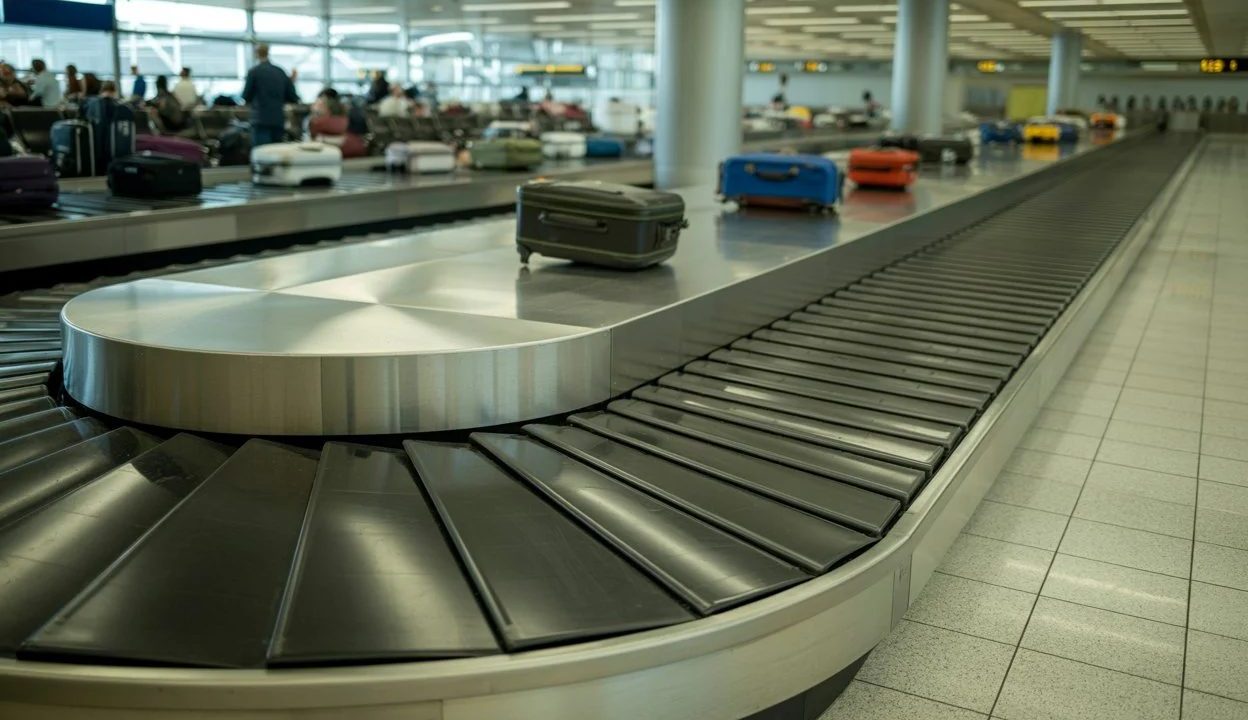
Rajesh Patel stared at the departure board in disbelief. His connecting flight from Delhi to Manchester had been delayed by three hours, and the gate had changed twice in the last thirty minutes. Around him, dozens of frustrated passengers clutched their boarding passes, unsure whether to stay put or trek across the massive terminal again.

“This is exactly what we’re trying to eliminate,” says the airport operations manager watching similar scenes unfold daily. “Every gate change, every delay caused by poor aircraft positioning – it creates a ripple effect that touches thousands of travelers.”
But Rajesh’s experience might soon become a thing of the past, thanks to a revolutionary AI system that’s transforming how airports manage aircraft positioning across the UK and Asia.

How Smart Technology Is Revolutionizing Airport Operations
Artificial intelligence is now taking control of one of aviation’s most complex puzzles: deciding where each aircraft should park. This isn’t just about finding an empty spot – it’s about orchestrating a ballet of hundreds of planes, thousands of passengers, and countless moving parts.
The new AI stand allocation systems analyze real-time data from multiple sources simultaneously. Weather patterns, passenger connection times, aircraft maintenance schedules, and even crew rest requirements all feed into algorithms that make split-second decisions about optimal aircraft positioning.

We’re seeing 40% fewer gate changes and significantly reduced taxi times since implementing AI allocation systems. The technology learns from every decision and gets smarter every day.
— Dr. Amanda Chen, Aviation Technology Specialist

Major airports across the UK, including Heathrow, Gatwick, and Manchester, have begun rolling out these intelligent systems. Meanwhile, Asian hubs like Singapore Changi, Hong Kong International, and Tokyo Narita are leading the charge with even more sophisticated implementations.
The technology doesn’t just react to problems – it predicts them. If a storm is approaching from the west, the AI might proactively move aircraft to sheltered positions. If a particular aircraft type tends to have longer boarding times, it gets assigned to gates with more buffer time.

What This Means for Your Next Trip
The benefits of AI stand allocation extend far beyond airline operations teams. Here’s how travelers are already experiencing smoother journeys:
| Improvement Area | Traditional System | AI-Enhanced System |
|---|---|---|
| Gate Changes | 15-20% of flights | 6-8% of flights |
| Average Taxi Time | 18 minutes | 12 minutes |
| Connection Success Rate | 78% | 91% |
| On-Time Departure | 72% | 84% |
Shorter connection times represent perhaps the most significant passenger benefit. The AI considers your tight connection when deciding where to park your incoming flight. Instead of landing at a remote stand requiring a bus ride, you’re more likely to get a gate close to your departure terminal.
Reduced taxi times mean less fuel burn, lower emissions, and most importantly for passengers, fewer delays. When your pilot announces “we’re number twelve for takeoff,” that wait time is shrinking thanks to more efficient ground movements.
Passengers don’t see the complexity behind gate assignments, but they definitely feel the results. Fewer announcements about gate changes, shorter walks between connections, less time sitting on the tarmac – it all adds up to a better travel experience.
— Marcus Thompson, Airport Operations Director
The Technology Behind Smoother Travel
Understanding how this AI revolution works helps explain why the improvements are so dramatic. The system processes thousands of variables every minute:
- Real-time weather data and forecasts
- Aircraft maintenance schedules and requirements
- Passenger connection data and walking times
- Ground crew availability and equipment positioning
- Fuel truck schedules and catering logistics
- Immigration and customs processing times
- Historical performance data for each aircraft type
The AI doesn’t just crunch numbers – it learns from outcomes. When a particular gate assignment leads to delays, the system remembers and adjusts future decisions. This continuous learning means performance improves over time without human intervention.
Machine learning algorithms can spot patterns humans miss. Maybe flights from certain origins tend to arrive with passengers who need extra assistance, requiring gates closer to medical facilities. Or perhaps specific aircraft types perform better at particular stands due to ground equipment compatibility.
What excites me most is how the AI considers the human element. It’s not just about moving metal efficiently – it’s about understanding that behind every seat assignment is a person trying to get somewhere important to them.
— Sarah Williams, Passenger Experience Analyst
Real Stories from the Tarmac
Early adopters are reporting remarkable improvements. London Heathrow’s Terminal 5 saw its best on-time performance in five years after implementing AI stand allocation. Singapore Changi reduced average connection times by eight minutes – crucial for passengers making tight international connections.
Airlines are noticing operational benefits too. Reduced ground time means aircraft spend more time in the air generating revenue. Fewer last-minute gate changes translate to lower operational costs and happier crew members.
The environmental impact shouldn’t be overlooked. Optimized taxi routes and reduced ground idle time significantly cut fuel consumption and emissions. Some airports report 15% reductions in ground-related fuel burn.
We’re essentially giving airports a nervous system that can think and react in real-time. The result is smoother operations for everyone – airlines, ground crews, and most importantly, passengers.
— Dr. James Liu, AI Systems Developer
As more airports adopt these intelligent systems, the benefits compound. International travelers moving between AI-enhanced airports experience remarkably smoother journeys, with fewer delays, shorter connection times, and less stress.
The technology is still evolving. Next-generation systems will integrate with air traffic control, weather services, and even passenger mobile apps to create truly seamless travel experiences. The future of air travel isn’t just about faster planes – it’s about smarter airports that anticipate and adapt to every challenge.
FAQs
How does AI stand allocation actually work?
The system analyzes hundreds of variables in real-time to assign aircraft to optimal parking positions, considering everything from weather to passenger connections.
Will this technology make flights more expensive?
No, the efficiency gains typically reduce airline operational costs, which can lead to more competitive pricing for passengers.
Which airports currently use AI stand allocation?
Major hubs including Heathrow, Singapore Changi, Hong Kong International, and Tokyo Narita have implemented or are testing these systems.
How much time can this save on connections?
Early data shows connection times reduced by 6-12 minutes on average, with some airports reporting even greater improvements.
Does the AI replace human decision-making entirely?
No, human operators can override AI decisions when necessary, but the system handles routine allocations automatically while learning from every outcome.
When will this technology be available at all major airports?
Industry experts predict widespread adoption within the next 3-5 years as airports see the competitive advantages and passenger benefits.

Leave a Reply