
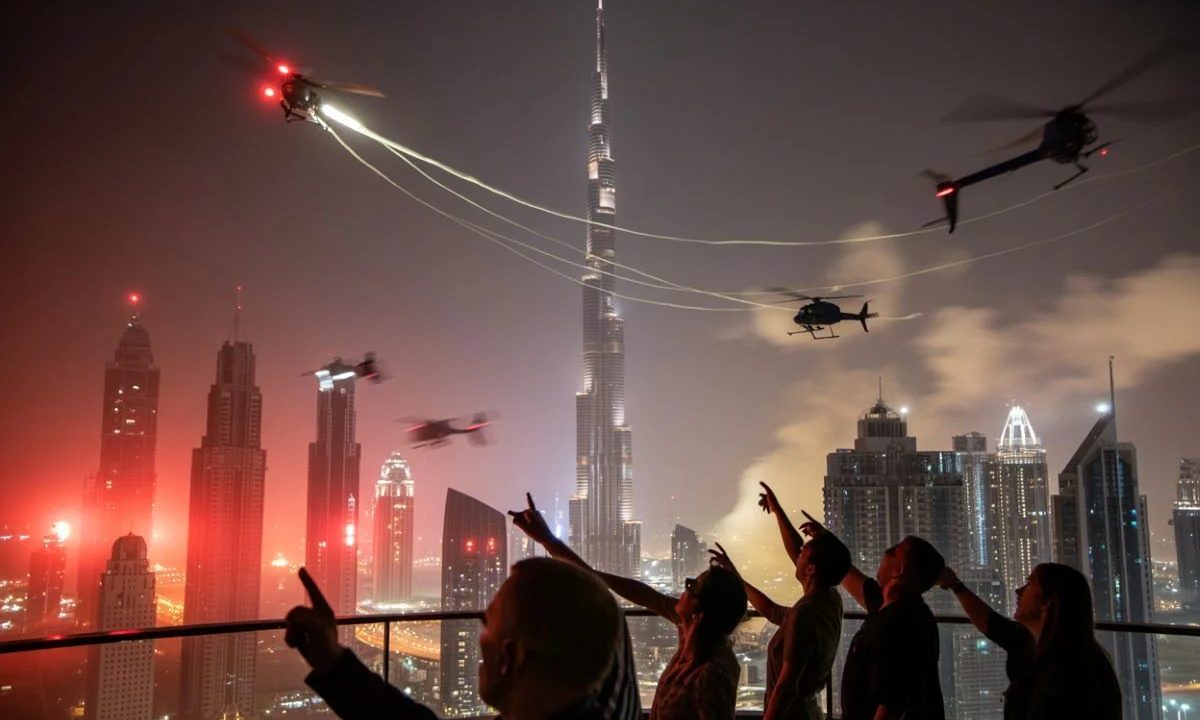
Fatima al-Rashid was scrolling through her phone at Dubai International Airport when the first security announcement echoed through the terminal. She looked up from her boarding pass, confusion spreading across her face as travelers around her began pulling out their devices, frantically checking news updates.
“Ma’am, I’m sorry, but your flight to London has been indefinitely delayed,” the gate agent announced over the intercom. Within minutes, what started as a routine vacation departure turned into a nightmare scenario that thousands of tourists are now facing across the UAE.
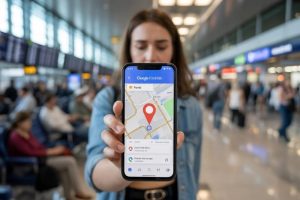
The unthinkable happened early Tuesday morning when Iranian drone strikes targeted areas near Dubai’s iconic Burj Khalifa, sending shockwaves through one of the world’s most visited tourist destinations and creating unprecedented travel chaos across the region.
When Paradise Becomes a War Zone
The attacks, which occurred approximately 2.5 kilometers from the world’s tallest building, have fundamentally altered Dubai’s reputation as a safe haven for international travelers. What was once considered the Middle East’s most stable tourist destination now finds itself at the center of escalating regional tensions.
Dubai’s tourism industry, which contributes over $40 billion annually to the UAE’s economy, is experiencing what officials are calling an “unprecedented crisis.” The emirate, known for its luxury shopping, ultramodern architecture, and vibrant nightlife, has suddenly become synonymous with conflict and uncertainty.
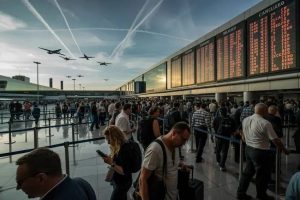
The psychological impact on travelers cannot be understated. When people see images of smoke near the Burj Khalifa, it shatters their perception of Dubai as an oasis of safety in a turbulent region.
— Dr. Ahmad Hassan, Middle East Tourism Analyst

The timing couldn’t be worse for the UAE’s tourism sector, which was finally recovering from the pandemic-related downturn. International visitor numbers had returned to pre-2020 levels, with Dubai welcoming over 16 million tourists last year alone.
The Numbers Tell a Devastating Story
The immediate aftermath of the drone strikes has created a domino effect across the region’s travel infrastructure. Airlines, hotels, and tour operators are scrambling to manage cancellations, refunds, and emergency evacuations.
| Impact Area | Current Status | Estimated Losses |
|---|---|---|
| Flight Cancellations | 347 flights cancelled | $12.8 million daily |
| Hotel Occupancy | Down 68% in 24 hours | $8.2 million daily |
| Tourist Departures | Emergency evacuations: 15,000+ | $25 million in refunds |
| New Bookings | Down 89% from previous week | $18.5 million in lost revenue |
Major international carriers have suspended operations to Dubai International Airport, while others have rerouted flights through alternative regional hubs. Emirates Airlines, the UAE’s flagship carrier, has been forced to cancel nearly 200 flights in the past 48 hours.
The ripple effects extend far beyond immediate cancellations:
- Over 50 international conferences and trade shows postponed or relocated
- Cruise ship operators diverting vessels away from UAE ports
- Tour operators across Europe and Asia issuing travel advisories
- Insurance companies updating policies to exclude conflict-related claims
- International hotel chains implementing emergency evacuation protocols
We’ve never seen anything like this in Dubai’s modern history. The city built its entire identity around being a safe, neutral zone where business and tourism could thrive regardless of regional politics.
— Sarah Chen, Regional Travel Industry Consultant
Tourists Caught in the Crossfire
The human cost of this crisis extends far beyond financial losses. Thousands of international visitors find themselves stranded in a destination that has suddenly become a potential conflict zone.
Hotels near the Burj Khalifa area have been evacuated as a precautionary measure, forcing guests to relocate to properties further from the city center. Many tourists report feeling abandoned by their travel insurance providers, who are citing “acts of war” clauses to deny coverage.
The psychological trauma is perhaps even more significant than the logistical challenges. Families who saved for years to visit Dubai are now dealing with the reality that their dream vacation has turned into a survival situation.
People don’t just lose money when something like this happens – they lose their sense of security about international travel. It takes years to rebuild that confidence.
— Dr. Maria Rodriguez, Crisis Management Specialist
Social media platforms are flooded with videos of panicked tourists at airports, long queues at embassy offices, and empty streets in areas that are normally bustling with international visitors. The contrast between Dubai’s carefully crafted image of luxury and safety and the current reality is stark and devastating.
The Broader Regional Implications
The Iranian drone strikes represent more than just an isolated incident – they signal a dangerous escalation in Middle Eastern tensions that threatens to destabilize the entire region’s tourism industry.
Other Gulf states are already feeling the impact as nervous travelers cancel trips to Qatar, Kuwait, and Bahrain. The perception of the entire Arabian Peninsula as a safe tourist destination is rapidly deteriorating.
When Dubai gets hit, it sends a message that nowhere in the region is truly safe. This could set back Middle Eastern tourism by a decade or more.
— James Mitchell, International Security Analyst
The economic implications extend beyond tourism. Dubai’s position as a global business hub, hosting thousands of international companies and serving as a gateway between East and West, is now under serious threat.
Recovery will require more than just an end to hostilities. Rebuilding consumer confidence in Dubai as a safe destination will demand significant investment in security infrastructure and a comprehensive international marketing campaign to restore the city’s damaged reputation.
For now, the glittering skyline that once symbolized hope and prosperity in the Middle East serves as a reminder of how quickly paradise can transform into a war zone, leaving thousands of dreams shattered and an entire industry fighting for survival.
FAQs
Are tourists currently safe in Dubai?
Current safety levels are uncertain, with many governments issuing travel advisories and recommending against non-essential travel to the UAE.
Will travel insurance cover cancellations due to the drone strikes?
Most standard travel insurance policies exclude coverage for acts of war or terrorism, leaving many travelers without financial protection.
How long might it take for Dubai’s tourism industry to recover?
Recovery timelines depend on regional stability, but historical precedents suggest it could take 2-5 years to fully restore tourist confidence.
Are other Middle Eastern destinations affected?
Yes, travelers are canceling trips throughout the Gulf region due to perceived increased security risks.
What should current visitors to Dubai do?
Contact your embassy immediately, stay informed through official channels, and consider evacuation if flights become available.
Will airlines provide full refunds for cancelled flights?
Refund policies vary by carrier, but most airlines are offering flexible rebooking options or credits rather than immediate cash refunds.

Leave a Reply