
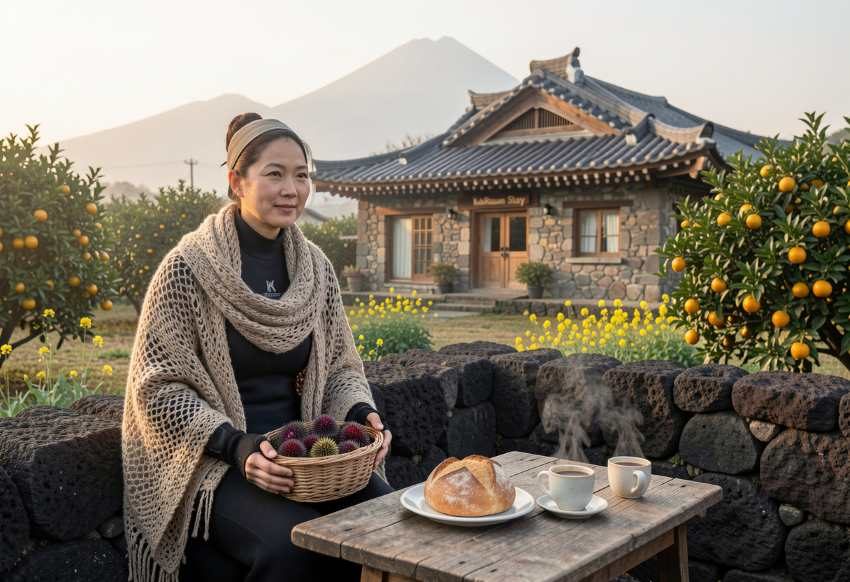
Eun-ji Kim watched her 73-year-old grandmother slip into her wetsuit with the same grace she’d witnessed countless times as a child. But this morning was different. Instead of diving alone into Jeju’s crystalline waters, three wide-eyed travelers from Seoul stood nervously beside her, adjusting their own gear.

“My grandmother has been a haenyeo for over fifty years,” Eun-ji explained to the visitors. “Today, she’s not just diving for sea urchins. She’s sharing a way of life that’s keeping our village alive.”
This scene, playing out across dozens of coastal villages on Jeju Island, represents a quiet revolution in how South Korea’s most famous destination is rethinking tourism beyond its crowded beaches and luxury resorts.
The Haenyeo Renaissance: From Survival to Sustainability
Jeju Island’s haenyeo—the legendary women divers who harvest seafood without breathing apparatus—have become the unexpected stars of a rural tourism transformation. These “women of the sea” are now cultural ambassadors, teaching visitors about sustainable living while breathing new life into aging communities.
The shift couldn’t come at a better time. Traditional coastal villages that once thrived on fishing and farming have watched their populations dwindle as young people migrate to cities. Now, these same communities are discovering that their greatest asset isn’t just the ocean—it’s their authentic way of life.

We realized that tourists were hungry for real experiences, not just photo opportunities. Our haenyeo grandmothers became our greatest teachers and our most powerful draw.
— Park Min-ho, Jeju Rural Tourism Association

Village stays have exploded in popularity, with bookings up 340% compared to pre-pandemic levels. Visitors are trading five-star hotels for traditional stone houses, learning to dive with haenyeo, and participating in seasonal harvests that connect them directly to the island’s agricultural heritage.
What Makes Jeju’s Village Experience Unique
The island’s approach to rural tourism goes far beyond simple homestays. Villages have developed immersive programs that showcase everything from traditional tangerine farming to the ancient art of stone wall building.

Here’s what travelers can expect from Jeju’s village stay programs:
| Experience Type | Duration | Key Activities | Best Season |
|---|---|---|---|
| Haenyeo Diving Program | 2-3 days | Traditional diving lessons, seafood preparation, cultural storytelling | April-October |
| Agricultural Village Stay | 3-5 days | Tangerine harvesting, traditional cooking, horseback riding | September-December |
| Coastal Fishing Experience | 2-4 days | Traditional fishing methods, boat building, marine conservation | May-September |
| Stone Culture Program | 1-3 days | Dol hareubang carving, stone wall construction, local history | Year-round |
- Authentic accommodations: Sleep in traditional thatched-roof houses or modern hanok-style guesthouses built with local volcanic stone
- Hands-on learning: Master traditional skills like making kimchi, weaving fishing nets, or preparing fresh abalone
- Intergenerational connections: Learn directly from elderly villagers who serve as cultural keepers and storytellers
- Sustainable practices: Participate in ocean cleanup efforts, organic farming, and renewable energy projects
- Digital detox opportunities: Many villages offer limited WiFi zones to encourage genuine cultural immersion
When visitors learn to dive with our haenyeo, they’re not just learning a skill—they’re connecting with a UNESCO-recognized culture that represents women’s empowerment and environmental harmony.
— Lee Sun-ja, Haenyeo Cultural Preservation Society
The Economic Ripple Effect Transforming Rural Communities
The numbers tell a compelling story. Villages participating in heritage tourism programs have seen average household incomes increase by 45% over the past three years. More importantly, young adults are returning to their ancestral homes to help run family guesthouses and cultural programs.
Take Seongsan village, home to the famous sunrise peak. Five years ago, it was struggling with an aging population and declining fishing industry. Today, it hosts over 15,000 cultural tourists annually, supporting 23 local businesses and employing 67 residents in tourism-related jobs.
The transformation extends beyond economics. Villages are investing tourism revenue into preserving traditional architecture, maintaining coastal ecosystems, and documenting oral histories that might otherwise be lost.
My daughter moved back from Busan to help run our family’s village stay program. Now my granddaughter is learning haenyeo traditions that I thought would die with my generation.
— Ko Jeong-sim, 68-year-old haenyeo and guesthouse owner
Challenges and Authentic Preservation
Success brings its own complications. Popular villages now face the delicate balance of welcoming visitors while preserving the authentic culture that attracts them in the first place.
Local authorities have implemented visitor caps during peak seasons and mandatory cultural orientation sessions to ensure tourists understand and respect traditional customs. Some villages have adopted “slow tourism” principles, encouraging longer stays over quick day trips.
The haenyeo community has been particularly thoughtful about commercialization. Rather than turning their diving practice into mere entertainment, they’ve created educational programs that emphasize ocean conservation, women’s historical roles, and sustainable fishing practices.
We want visitors to leave as advocates for our way of life, not just with pretty photos. That means they need to understand why haenyeo culture matters for the future, not just the past.
— Dr. Kim Yeon-soo, Jeju National University Tourism Research Center
Planning Your Village Stay Experience
The best village stays book months in advance, especially during autumn tangerine season and summer diving programs. Most programs include meals featuring locally caught seafood and island-grown vegetables, cultural workshops, and opportunities to contribute to community projects.
Prices range from $40-80 per night for basic accommodations, with full cultural immersion packages averaging $120-200 per person daily. The investment supports direct community development and provides visitors with experiences impossible to find in conventional tourism.
Language barriers are minimal, as many program leaders speak basic English or provide translation services. The emphasis on hands-on learning and shared activities creates natural communication bridges that transcend linguistic differences.
FAQs
Do I need diving experience to participate in haenyeo programs?
No previous experience is required. Programs include basic swimming and diving instruction suitable for beginners, with safety always prioritized.
What’s the best time to visit for village stays?
April through October offers the most diverse activities, though winter stays provide unique experiences like traditional food preservation and indoor crafts.
How do I book authentic village stays versus tourist traps?
Book through the official Jeju Rural Tourism Association or verified community cooperatives rather than third-party travel sites.
Are village stays suitable for families with children?
Most programs welcome families and offer age-appropriate activities, though some diving experiences have minimum age requirements of 12-14 years.
What should I pack for a village stay?
Comfortable clothing for outdoor activities, reef-safe sunscreen, and an open mind. Most specialized equipment is provided by host families.
How much Korean language do I need to know?
Basic phrases are helpful but not essential. Many cultural activities rely on demonstration and hands-on learning that transcends language barriers.

Leave a Reply