
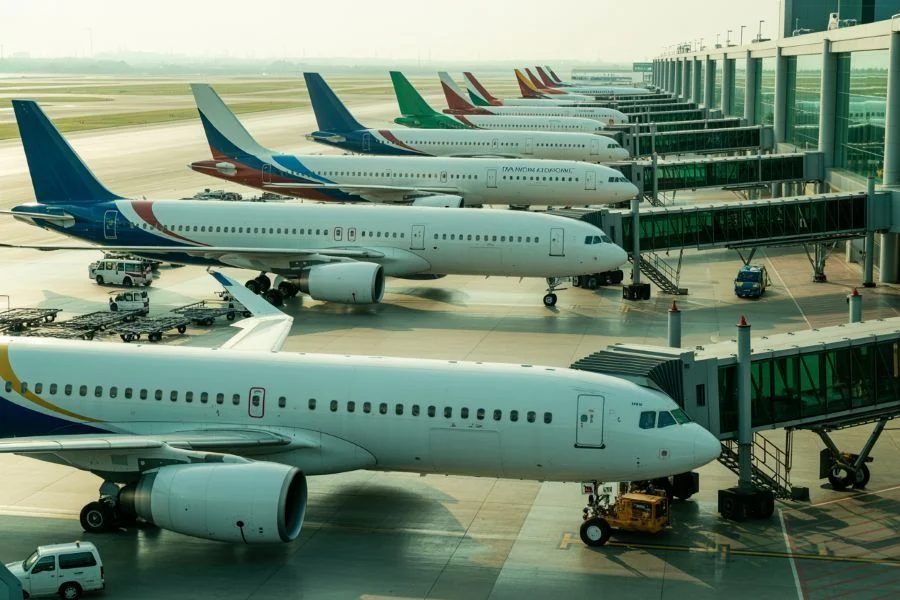
Fatima Khalil refreshed her phone for the tenth time in five minutes, watching her Qatar Airways flight status change from “delayed” to “cancelled.” The Dubai-based marketing executive was supposed to fly to Amsterdam for a crucial client meeting, but like thousands of other travelers this week, she found herself stranded as Middle East flight disruptions continue to ripple across the aviation industry.

“I’ve been traveling this route for years,” Fatima said, scrolling through alternative flight options that seemed to disappear as quickly as they appeared. “I’ve never seen anything like this.”
She’s not alone. From Dubai’s bustling terminals to Amsterdam’s Schiphol Airport, travelers are facing an unprecedented wave of flight cancellations and route suspensions that’s reshaping Middle East aviation in real-time.

Why Major Airlines Are Pulling Out of Key Middle East Routes
The aviation landscape across the Middle East has shifted dramatically as major carriers make tough decisions about route viability and passenger safety. KLM Royal Dutch Airlines recently announced the cancellation of its Dubai flights, while Qatar Airways has suspended multiple operations, creating a domino effect throughout the region.
These aren’t temporary weather delays or minor scheduling adjustments. We’re looking at strategic decisions by airlines to completely halt services on routes that have been profitable for decades.

The current situation represents one of the most significant disruptions to Middle East aviation we’ve seen in recent years. Airlines are having to make incredibly difficult choices about which routes to maintain.
— Captain Ahmed Hassan, Aviation Industry Analyst

The ripple effects extend far beyond individual travelers. Business conferences are being postponed, family reunions cancelled, and cargo shipments rerouted through increasingly congested alternative pathways.
Airlines are citing multiple factors for these disruptions, including operational challenges, crew availability issues, and broader regional considerations that are forcing carriers to reassess their Middle East strategies.

Which Routes and Airlines Are Most Affected
The scope of these disruptions is staggering when you break down the numbers. Here’s what travelers need to know about the most impacted routes and carriers:
| Airline | Affected Routes | Status | Expected Duration |
|---|---|---|---|
| KLM | Amsterdam-Dubai | Cancelled | Indefinite |
| Qatar Airways | Multiple European routes | Suspended | Under review |
| Emirates | Select destinations | Reduced frequency | Ongoing assessment |
| Etihad | Various European cities | Schedule changes | Weekly evaluation |
The most heavily impacted routes include:
- Dubai to major European hubs (Amsterdam, Frankfurt, London)
- Doha connections to Scandinavian cities
- Abu Dhabi routes to Eastern European destinations
- Secondary Middle Eastern cities losing connecting flight options
- Cargo routes that support regional trade partnerships
We’re seeing a complete reshuffling of how people move between Europe and the Middle East. Routes that passengers took for granted are simply not available right now.
— Sarah Mitchell, Travel Industry Consultant
Business travelers are particularly hard hit, as many relied on these routes for same-day connections and efficient travel between key commercial centers.
What This Means for Your Travel Plans
If you’re planning travel to or through the Middle East, the reality is harsh: flexibility has become more valuable than any frequent flyer status. The old rules of aviation simply don’t apply in the current environment.
Ticket prices on remaining routes have surged as demand concentrates on fewer available flights. What used to be a $800 Dubai-Amsterdam flight is now approaching $2,000 on alternative carriers, if seats are available at all.
Travel insurance has become crucial, but even comprehensive policies are struggling to keep up with the pace of cancellations. Many travelers are discovering that “operational disruptions” aren’t always covered under standard terms.
The passengers calling us are frustrated and confused. They booked flights months ago on established routes, and now they’re being told those flights simply don’t exist anymore.
— Marcus Weber, Customer Service Director at European Travel Agency
For families planning visits, the disruptions are particularly painful. Grandparents who haven’t seen grandchildren in months are facing the reality that their planned reunions might need to be postponed indefinitely.
Corporate travel departments are scrambling to find alternatives, often routing employees through multiple connections that turn 6-hour direct flights into 14-hour odysseys with overnight layovers.
Alternative Options and What’s Next
The aviation industry is adapting, but slowly. Turkish Airlines and other regional carriers are seeing unprecedented demand as travelers seek alternative routing options. Istanbul has become an even more critical hub as passengers route around suspended direct services.
Some travelers are turning to overland options, driving from Dubai to European destinations through multiple countries – a journey that takes days but provides more certainty than constantly changing flight schedules.
We’re seeing people make travel decisions they never thought they’d have to make. The convenience of Middle East aviation hubs that we all took for granted has been temporarily shattered.
— Dr. Amira Osman, Transportation Economics Professor
Airlines are promising regular updates on service resumption, but industry insiders suggest that some route suspensions could extend well into the coming months. The financial pressure on carriers means that only the most profitable routes are likely to return quickly.
For travelers with existing bookings, the advice is clear: stay in constant contact with your airline, have backup plans ready, and consider whether your trip is truly essential. The era of predictable Middle East aviation has temporarily ended, and nobody knows exactly when it will return.
FAQs
Will KLM resume Dubai flights soon?
KLM hasn’t provided a timeline for resuming Dubai services, stating they’re monitoring the situation continuously.
Can I get a refund for cancelled Middle East flights?
Yes, airlines are required to offer full refunds for cancelled flights, though processing times may be longer than usual.
Which airlines are still flying to Dubai?
Emirates, Turkish Airlines, and several other carriers maintain Dubai services, though with potential schedule changes.
Are connecting flights through the Middle East safe to book?
While safe, they carry higher cancellation risks, so consider travel insurance and flexible booking options.
How long might these disruptions last?
Airlines haven’t provided definitive timelines, with most saying they’re evaluating operations on a weekly or monthly basis.
What should I do if I have a Middle East trip planned?
Contact your airline immediately, review alternative routing options, and ensure you have comprehensive travel insurance.

Leave a Reply