

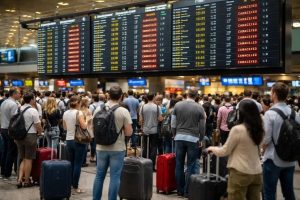
Declan O’Brien was scrolling through his phone at Dublin Airport, boarding pass in hand, when the notification popped up. His dream honeymoon to Cuba—planned for months with his new wife Siobhan—had just become infinitely more complicated.

“Love, you need to see this,” he called out, his voice tight with concern. The Department of Foreign Affairs had just issued a fresh travel advisory, and Cuba was now on the list alongside countries he’d never imagined visiting during times of unrest.
What started as a romantic getaway suddenly felt like navigating a minefield of global uncertainty.

Ireland Issues Sweeping Travel Warnings as Global Tensions Escalate
The Department of Foreign Affairs (DFA) has dramatically expanded its travel advisory list, adding Cuba to an already concerning roster that includes Bahrain, Saudi Arabia, UAE, Qatar, Jordan, and Ecuador. This isn’t just bureaucratic paperwork—it’s a stark reflection of how quickly our world is changing.
Irish travelers are now facing unprecedented challenges as political unrest, security concerns, and regional conflicts create a complex web of potential dangers across multiple continents. The advisory system, designed to protect Irish citizens abroad, has become a barometer of global instability.
The current geopolitical climate requires us to be more vigilant than ever before. We’re seeing simultaneous challenges across regions that were previously considered stable travel destinations.
— Ambassador Patricia Collins, Former Irish Diplomatic Corps

These advisories aren’t suggestions—they carry real weight for travelers, affecting everything from insurance coverage to emergency consular support. When the DFA issues a warning, it’s based on credible intelligence about risks that could endanger Irish citizens.
Breaking Down the Countries and Their Specific Risks
Each country on this expanded list presents unique challenges that Irish travelers need to understand before making any travel decisions.
| Country | Primary Risk Factors | Advisory Level |
|---|---|---|
| Cuba | Political demonstrations, economic instability | Exercise heightened caution |
| Bahrain | Regional tensions, potential civil unrest | Reconsider travel |
| Saudi Arabia | Security threats, regional conflicts | Exercise increased caution |
| UAE | Heightened security concerns | Exercise normal precautions |
| Qatar | Regional diplomatic tensions | Exercise increased caution |
| Jordan | Border security issues, regional spillover | Reconsider travel |
| Ecuador | Internal security deterioration, crime surge | Reconsider travel |
Cuba’s inclusion might surprise many Irish travelers who view the island nation as a relatively safe Caribbean destination. However, recent political demonstrations and severe economic challenges have created an unpredictable environment that poses new risks for foreign visitors.
Cuba’s economic crisis has reached a tipping point. What we’re seeing now are spontaneous protests and social tensions that didn’t exist even two years ago.
— Dr. Maria Gonzalez, Latin American Studies Institute
The Middle Eastern countries on the list reflect ongoing regional tensions that have intensified in recent months. Even traditionally stable destinations like the UAE are experiencing heightened security measures that could affect tourist experiences.
What This Means for Your Travel Plans
If you’re an Irish traveler with existing bookings to any of these countries, don’t panic—but do take action. These advisories don’t automatically mean you can’t travel, but they do mean you need to be significantly more prepared.
Your travel insurance might not cover incidents in countries with active DFA advisories. This is crucial because medical evacuations or emergency repatriation can cost tens of thousands of euros. Check your policy immediately and consider upgrading if necessary.
- Register with the DFA’s travel registration service before departure
- Maintain constant communication with family back home
- Keep multiple copies of important documents
- Have emergency funds accessible in multiple forms
- Research local customs and current political situations thoroughly
- Identify Irish embassy or consulate locations and contact information
Airlines and tour operators are required to inform customers about travel advisories, but the responsibility ultimately falls on individual travelers to make informed decisions.
We’re seeing a 40% increase in travel insurance claims related to political unrest and security concerns. Travelers who ignore these advisories often find themselves without coverage when they need it most.
— James Murphy, Irish Travel Insurance Association
The Bigger Picture: Global Instability and Irish Travelers
This wave of travel advisories reflects broader global trends that are reshaping international travel. Climate change, political polarization, economic inequality, and regional conflicts are creating a perfect storm of instability across multiple continents.
For Irish travelers, this means adapting to a new reality where destinations can shift from safe to risky with little warning. The days of booking a trip and assuming everything will remain stable are increasingly behind us.
Travel industry experts are advising Irish citizens to build flexibility into their travel plans. This might mean purchasing refundable bookings, avoiding peak political seasons, or choosing destinations with strong diplomatic ties to Ireland.
The travel landscape has fundamentally changed. We’re advising clients to think of travel advisories not as obstacles, but as essential safety information that should inform every international trip.
— Sarah O’Connor, Dublin Travel Agents Association
The economic impact extends beyond individual travelers. Irish travel agencies report increasing cancellations and requests for alternative destinations, while airlines are adjusting routes based on these evolving security assessments.
Staying Safe and Informed
The key to navigating this challenging travel environment is staying informed and remaining flexible. The DFA regularly updates its advisories based on current intelligence, so what’s true today might change tomorrow.
Subscribe to DFA travel alerts, follow Irish embassy social media accounts in your destination country, and maintain connections with local Irish communities abroad. These networks often provide the most current, practical information about on-ground conditions.
Remember that travel advisories exist to protect you, not to limit your adventures. With proper preparation, awareness, and flexibility, Irish travelers can still explore the world safely—they just need to be smarter about how they do it.
FAQs
Will my travel insurance cover me if I travel to a country with a DFA advisory?
Most policies exclude coverage for travel to countries with active “reconsider travel” or higher-level advisories, so check your specific policy terms.
How often does the DFA update travel advisories?
Advisories are updated as situations change, sometimes daily during rapidly evolving crises, so check regularly before and during travel.
Can I still get consular assistance if I travel despite an advisory?
Yes, Irish embassies will still provide assistance, but their ability to help may be limited in high-risk situations.
Should I cancel my trip if my destination gets added to the advisory list?
Consider the specific risks, your travel insurance coverage, and your personal risk tolerance before making a decision.
How do I register my travel plans with the DFA?
Use the online travel registration service on the DFA website, providing detailed itinerary and contact information.
Are group tours safer than independent travel in advisory countries?
Group tours may offer additional security measures and local knowledge, but they don’t eliminate the underlying risks that prompted the advisory.
Leave a Reply