
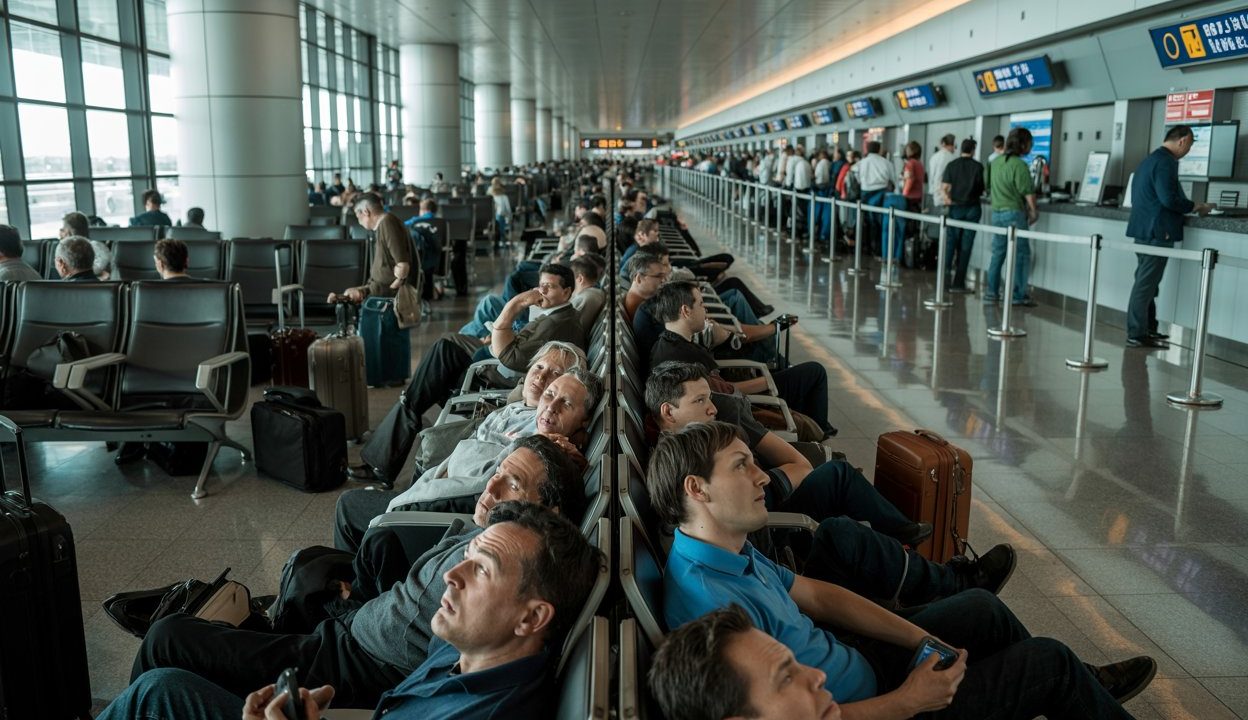
Fatima Al-Rashid stared at her phone in disbelief as the notification flashed across her screen. Her family reunion in Kochi—the first time in three years she’d see her elderly grandmother—was suddenly in jeopardy. The Gulf Air flight she’d booked months ago had just been canceled, along with nearly a dozen other flights across the region.

“I can’t believe this is happening again,” she whispered to her husband, scrolling through the growing list of cancellations affecting routes between Oman, Qatar, and India. What was supposed to be a joyful family gathering had turned into a logistical nightmare.
Fatima isn’t alone. Thousands of travelers across the Gulf region are facing similar disruptions as major airlines scramble to manage an unprecedented wave of flight cancellations.

What’s Behind the Latest Travel Chaos
The current travel disruption is hitting multiple major carriers simultaneously, with Gulf Air, Qatar Airways, and IndiGo all forced to cancel flights across key routes. The affected destinations span from Doha and Muscat to Kochi, Salalah, and several other critical hubs that connect millions of passengers throughout the Middle East and South Asia.
Unlike typical weather-related delays, this disruption stems from a complex mix of operational challenges that have created a perfect storm for travelers. The cancellations are affecting both business and leisure routes, leaving passengers stranded during what should be peak travel season.

We’re seeing operational pressures that we haven’t experienced since the immediate post-pandemic recovery period. Multiple factors are converging to create significant challenges for airlines across the region.
— Aviation analyst speaking on condition of anonymity

The ripple effects are being felt far beyond the immediate inconvenience. Hotels are overbooked with stranded passengers, rental car agencies are running out of vehicles, and alternative flights are being snapped up at premium prices.
Breaking Down the Flight Cancellations
Here’s what we know about the specific routes and airlines affected by the current wave of cancellations:

| Airline | Affected Routes | Estimated Passengers Impacted |
|---|---|---|
| Gulf Air | Muscat-Doha, Salalah-Mumbai | 800+ |
| Qatar Airways | Doha-Kochi, Doha-Muscat | 1,200+ |
| IndiGo | Kochi-Muscat, Mumbai-Salalah | 600+ |
The cancellations are particularly impacting:
- Business travelers with time-sensitive meetings and conferences
- Families planning long-awaited reunions and celebrations
- Medical tourists traveling for specialized treatments
- Students returning to universities after holiday breaks
- Workers in the oil and gas industry with shift rotations
Each canceled flight creates a domino effect. When a morning departure gets scrapped, it doesn’t just affect those passengers—it impacts the return flight, connecting flights, and often flights the next day as aircraft and crew schedules get completely reshuffled.
Every cancellation is like pulling a thread in a complex tapestry. The whole pattern starts to unravel, and it takes days or even weeks to weave it back together properly.
— Regional airline operations manager
Who’s Really Feeling the Impact
The human cost of these disruptions goes far beyond inconvenience. Take the case of medical tourists who’ve traveled from across South Asia to receive specialized treatment in Gulf hospitals. Many have scheduled procedures that can’t be easily rescheduled, creating genuine health concerns.
Oil and gas workers face a different kind of pressure. Many work on rotation schedules where being even a day late can result in lost wages or disciplinary action. For them, a canceled flight isn’t just an inconvenience—it’s a threat to their livelihood.
Families are perhaps hit hardest emotionally. Wedding celebrations, milestone birthdays, and religious festivals don’t wait for airline schedules to normalize. The cost of rebooking on alternative carriers—if seats are even available—can easily double or triple travel expenses.
We’re seeing passengers break down in tears at our customer service desks. These aren’t just trips—they’re life events that can’t be postponed or replanned easily.
— Airport customer service supervisor
What Airlines Are Doing to Fix This
The affected carriers are working around the clock to minimize passenger impact, but their options are limited. Gulf Air has deployed larger aircraft on some routes to accommodate displaced passengers, while Qatar Airways is offering flexible rebooking policies without change fees.
IndiGo has taken a different approach, partnering with other carriers to provide alternative routing options, though these often involve longer travel times and additional stops. The airline is also providing hotel accommodations for passengers stranded overnight.
However, industry insiders warn that the solutions are temporary patches rather than long-term fixes. The underlying operational challenges that triggered these cancellations haven’t been fully resolved.
Airlines are essentially playing a game of musical chairs with aircraft and crew. Eventually, the music stops, and someone gets left without a seat—literally and figuratively.
— Aviation industry consultant
Looking Ahead: When Will Normal Service Resume
The big question on every traveler’s mind is when they can expect reliable service to return. While airlines are hesitant to provide specific timelines, industry experts suggest the situation should stabilize within the next two weeks.
However, the recovery won’t be uniform across all routes. High-demand destinations like Kochi and Doha are likely to see priority restoration of services, while smaller routes may take longer to normalize.
Passengers planning travel in the coming weeks are advised to book refundable tickets where possible and consider travel insurance. The situation remains fluid, and additional cancellations can’t be ruled out.
For travelers like Fatima, the uncertainty is the hardest part. She eventually managed to secure a seat on an alternative routing that added eight hours to her journey, but she’ll make it to her grandmother’s side—just a day later than planned.
FAQs
Which airlines are affected by the current flight cancellations?
Gulf Air, Qatar Airways, and IndiGo are the primary carriers experiencing cancellations, affecting routes between Oman, Qatar, India, and other regional destinations.
Am I entitled to compensation for canceled flights?
Compensation depends on your departure location, destination, and the specific circumstances of the cancellation. Most airlines are offering flexible rebooking without fees during this disruption.
How can I check if my flight is affected?
Check directly with your airline’s website or mobile app, as this information is updated more frequently than third-party booking sites.
Should I still travel if my flight hasn’t been canceled yet?
Arrive at the airport early and have backup plans ready. Consider purchasing travel insurance if you haven’t already.
What should I do if I’m stranded at an airport?
Contact your airline’s customer service immediately and ask about accommodation vouchers, meal allowances, and alternative routing options.
When will flight schedules return to normal?
Industry experts expect stabilization within two weeks, though high-demand routes may recover faster than others.

Leave a Reply