
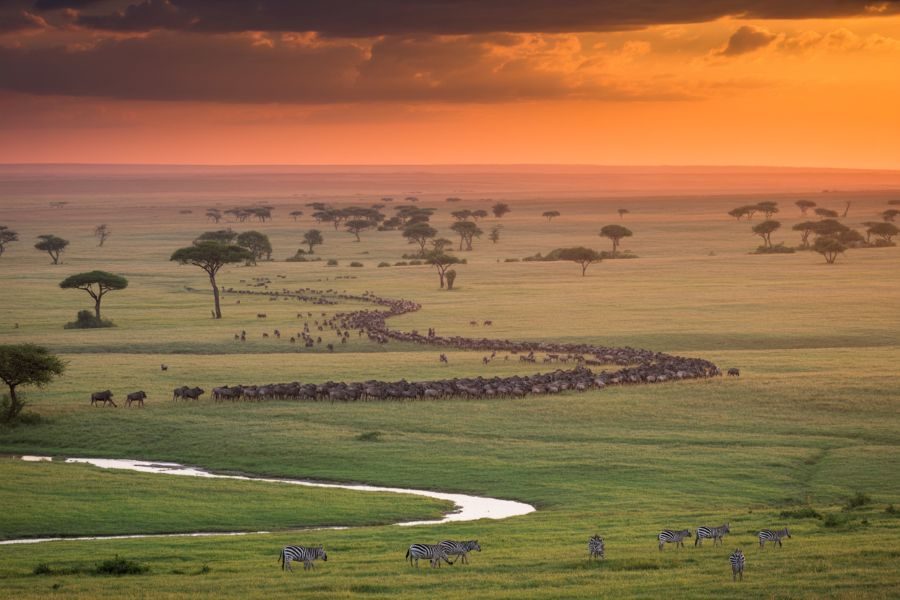
The radio crackled to life in the safari jeep just as Kofi Mensah was pointing out a pride of lions to his guests. “All tour operators, emergency weather alert,” came the urgent voice. Within minutes, what had been a perfect sunny morning in the Serengeti transformed into something far more dangerous. Dark clouds rolled in like a curtain, and the distant rumble wasn’t from wildlife—it was rushing water.
Kofi, a veteran guide with fifteen years of experience, had never heard such urgency in the radio dispatches. His guests from Germany looked confused as he quickly turned the vehicle around, but they’d understand soon enough. Flash floods in the Serengeti don’t announce themselves with gentle warnings.
This scene played out across Tanzania’s most famous national park last week, as tour operators issued emergency safety warnings for the first time in recent memory. The situation has left thousands of planned safari trips in limbo and raised serious questions about tourist safety during Tanzania’s unpredictable weather seasons.
What’s Really Happening in the Serengeti Right Now
The Serengeti ecosystem is experiencing unprecedented rainfall patterns that have caught both wildlife and tourism operators off guard. Unlike the predictable seasonal rains that typically nourish the savanna, these sudden deluges are creating dangerous conditions across popular safari routes.
Tanzania’s meteorological department recorded rainfall amounts 300% above normal for this time of year in the northern Serengeti region. The problem isn’t just the volume—it’s the speed. When rain hits the hard-packed earth after dry periods, it doesn’t absorb. Instead, it races across the landscape, turning dry riverbeds into torrents and creating lakes where there were none hours before.
The water comes so fast that even our most experienced drivers are caught off guard. We’re talking about roads that become rivers in fifteen minutes.
— James Mollel, Serengeti Safari Association
Tour operators have suspended activities in the most affected areas, including popular spots near the Mara River and several mobile camp locations. The Tanzanian National Parks Authority has temporarily closed certain access roads and is working with private operators to establish safer alternative routes.
The Real Dangers Safari Tourists Are Facing
Flash floods in safari environments create unique hazards that most tourists never consider when booking their dream African adventure. The risks go far beyond getting stuck in mud.

Here’s what makes these floods particularly dangerous for safari-goers:
- Vehicle entrapment – Safari vehicles can become completely surrounded by water in minutes, with no high ground visible
- Wildlife displacement – Dangerous animals are forced into unusual areas, including near roads and camps
- Communication blackouts – Cell towers and radio equipment fail when flooded, cutting off emergency contact
- Medical access issues – Emergency evacuation becomes impossible when airstrips flood
- Contaminated water sources – Floods mix sewage and wildlife waste, creating health hazards at camps
| Risk Level | Affected Areas | Current Status | Tourist Access |
|---|---|---|---|
| Critical | Northern Serengeti | Operations suspended | No entry |
| High | Central Serengeti | Limited operations | Guided only |
| Moderate | Southern Serengeti | Normal with monitoring | Open |
| Low | Ngorongoro Crater | Normal operations | Open |
We had guests who were supposed to fly out, but the airstrip was under two feet of water. They ended up staying three extra days, which sounds nice until you realize we were rationing food and water.
— Patricia Kimani, Safari Lodge Manager
How This Affects Your Safari Plans
If you’re planning a Serengeti safari in the coming months, these developments will likely impact your trip in ways your travel agent might not have mentioned yet.
Most tour operators are now requiring flexible booking policies, meaning your carefully planned itinerary could change with just hours of notice. Some are offering alternative destinations within Tanzania, while others are pushing trips to later in the year when weather patterns typically stabilize.
The financial implications are significant too. Travel insurance policies often don’t cover “acts of nature” unless you purchased specific weather-related coverage. Many tourists are discovering this the hard way when their dream safaris get cancelled or cut short.
Insurance companies are getting hundreds of claims from Serengeti trips, but most standard policies won’t cover weather-related cancellations unless the traveler bought additional coverage.
— Michael Reeves, Travel Insurance Specialist
Airlines serving Kilimanjaro International Airport report increased rebooking requests, and some are waiving change fees for Tanzania-bound passengers. However, finding alternative dates during peak safari season remains challenging.
What Safari Operators Are Doing to Keep Tourists Safe
The tourism industry in Tanzania has responded quickly to these unusual conditions, implementing new safety protocols that go beyond standard operating procedures.
Major safari companies now require real-time weather monitoring equipment in all vehicles. Guides carry satellite phones instead of relying solely on radio communication. Some operators have established emergency supply caches at strategic locations throughout the Serengeti.
Mobile camps—those luxury tented accommodations that move with animal migrations—are staying put until conditions improve. Several have relocated to higher ground, even if it means guests won’t see the wildlife concentrations they came for.
Safety has to come first, even if it means disappointed customers. A boring safari is better than a dangerous one.
— David Msangi, Tanzania Safari Operators Association
The Tanzanian government has also stepped up, deploying additional rangers and emergency response teams to popular safari areas. They’re working with international weather services to improve flood prediction systems specifically for tourism zones.
What This Means for Tanzania’s Tourism Future
These flash floods represent more than just a temporary inconvenience—they’re forcing the entire safari industry to reconsider how it operates in an era of unpredictable weather patterns.
Some operators are investing in amphibious vehicles and elevated accommodation structures. Others are diversifying their offerings to include more indoor cultural experiences that don’t depend on weather conditions.
The long-term impact on Tanzania’s economy could be substantial. Tourism accounts for nearly 18% of the country’s GDP, and safari tourism represents the largest portion of that revenue. Extended disruptions could affect everything from local employment to foreign currency reserves.
However, the crisis is also spurring innovation. New weather monitoring systems, improved emergency protocols, and better tourist education about African weather realities could make future safaris safer and more reliable.
FAQs
Are all Serengeti safaris currently cancelled?
No, only the northern sections are fully closed. Central and southern areas have limited operations with enhanced safety measures.
Will travel insurance cover my cancelled safari?
Only if you purchased weather-related coverage. Standard policies typically exclude natural weather events.
How long will these conditions last?
Weather experts expect conditions to stabilize within 2-3 weeks, but some areas may remain affected longer.
Is it safe to book a safari for next month?
Yes, but choose operators with flexible cancellation policies and comprehensive safety protocols.
What’s the best time to visit the Serengeti to avoid floods?
July through October typically have the most stable weather conditions for safari activities.
Are other Tanzanian parks affected?
Ngorongoro Crater and Tarangire National Park are operating normally with minimal weather impact.

Leave a Reply