
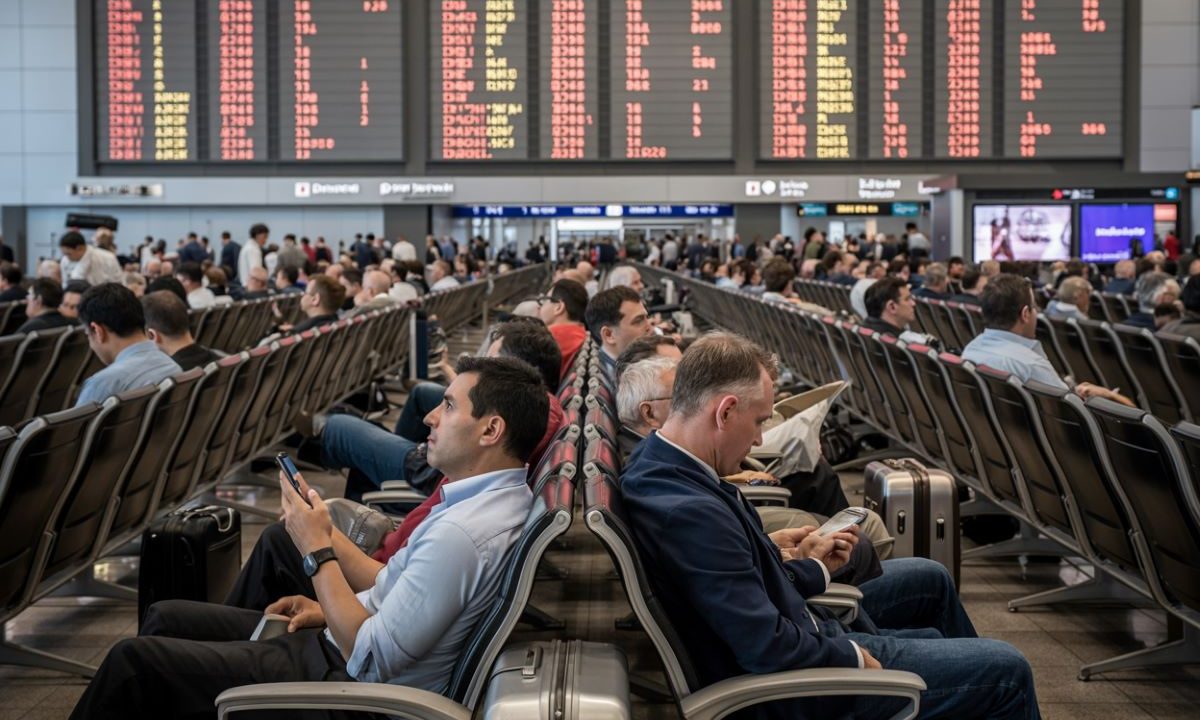
Dimitri stared at his phone screen in disbelief as the notification popped up. His long-awaited business trip to Dubai – months in the planning – had just been canceled by KLM. “Not again,” he muttered, remembering how his colleague’s flight to Beirut was scrapped just weeks earlier.

He’s not alone. Across Europe, thousands of travelers are facing the same crushing disappointment as major airlines pull the plug on Middle East routes with no clear end date in sight.
What started as temporary precautions has now become an extended reality, leaving passengers stranded and businesses scrambling to find alternatives.

European Airlines Hit the Brakes on Middle East Travel
The aviation industry is experiencing one of its most challenging periods as escalating conflicts in the Middle East force airlines to make tough decisions. KLM has become the latest carrier to extend flight cancellations to key Middle East destinations, joining a growing list of European airlines prioritizing passenger safety over profit.
The Dutch carrier’s decision mirrors actions taken by British Airways, Air France, Aegean Airlines, Finnair, and ITA Airways. These aren’t small regional players – we’re talking about some of Europe’s most established airlines, collectively serving millions of passengers annually.

The situation is unprecedented in its scope and duration. We’re seeing coordinated responses across the industry that prioritize safety above all else.
— Aviation analyst Marcus Weber
The cancellations stem from increasing concerns about airspace security and the risk of aircraft interception over conflict zones. Intelligence reports suggesting potential threats to civilian aircraft have prompted aviation authorities to recommend avoiding certain flight paths entirely.
What makes this situation particularly complex is the interconnected nature of Middle Eastern airspace. Many popular routes to Asia and Africa typically transit through the region, meaning the impact extends far beyond direct Middle East destinations.

Which Routes Are Affected and When Will They Resume?
The scope of these cancellations is staggering. Here’s what travelers need to know about affected routes and timelines:
| Airline | Suspended Destinations | Extension Period |
|---|---|---|
| KLM | Tel Aviv, Beirut, Tehran | Through March 2024 |
| British Airways | Tel Aviv, Amman, Kuwait | Under review |
| Air France | Beirut, Tel Aviv | Through February 2024 |
| Aegean Airlines | Tel Aviv, Beirut | Through April 2024 |
| Finnair | Multiple Middle East cities | Indefinite |
| ITA Airways | Tel Aviv, Tehran | Through March 2024 |
The airlines are taking different approaches to the crisis:
- Immediate cancellations: Most carriers are suspending flights within 24-48 hours of announcements
- Flexible rebooking: Airlines are waiving change fees for affected passengers
- Alternative routing: Some flights are being rerouted through longer, safer paths
- Partner arrangements: Codeshare agreements with non-European carriers continue some services
- Regular reassessment: Airlines are reviewing the situation weekly rather than monthly
We’re not just looking at current threats, but projecting potential risks weeks ahead. The safety margin has to be substantial when you’re responsible for hundreds of lives per flight.
— Captain Elena Rodriguez, International Pilots Association
The financial implications are enormous. Each canceled long-haul flight represents hundreds of thousands of dollars in lost revenue, not counting the costs of passenger compensation and rebooking.
The Ripple Effect: Who’s Really Paying the Price?
Beyond the headlines and airline statements, real people are bearing the brunt of these disruptions. Business travelers like Dimitri represent just one segment of those affected.
Families separated by geography are finding it increasingly difficult to reunite. Wedding plans, medical appointments, and critical business meetings are being postponed indefinitely. The human cost extends far beyond inconvenience.
The tourism industries in affected Middle Eastern countries are particularly hard hit. Hotels, tour operators, and local businesses that depend on European visitors are seeing bookings evaporate overnight.
We’re seeing a 60-70% drop in European bookings for the spring season. These aren’t just numbers – they represent livelihoods and communities that depend on tourism.
— Travel industry consultant Ahmed Al-Mansouri
Corporate travel departments are scrambling to find alternatives. Some companies are switching to Middle Eastern or Asian carriers that continue operating these routes, while others are postponing non-essential travel entirely.
The cargo industry faces similar challenges. European airlines handle significant freight volumes to and from the Middle East, and these cancellations are disrupting supply chains for everything from electronics to perishable goods.
What This Means for Future Travel Planning
The current situation is reshaping how people think about international travel. The days of booking a flight months in advance with complete confidence may be over, at least for certain regions.
Travel insurance is becoming more crucial than ever. Policies that cover trip cancellations due to political instability or security concerns are seeing increased demand.
Alternative routing is becoming the norm rather than the exception. Flights that once took six hours may now require eight or nine hours with different connections. Travelers are having to factor in additional time and costs.
Flexibility is the new currency in travel. Passengers who can adapt their plans quickly are the ones who’ll continue moving, even in these uncertain times.
— Travel consultant Patricia Hendricks
Airlines are also investing heavily in real-time threat assessment systems. The goal is to make faster, more informed decisions about route safety rather than implementing blanket cancellations.
Some carriers are exploring partnerships with regional airlines that may have different risk assessments or government approvals to continue operating in affected areas.
Looking Ahead: When Will Normal Service Resume?
The million-dollar question remains: when will these routes reopen? Unfortunately, there’s no clear answer. Unlike weather-related disruptions that resolve in days, geopolitical situations can persist for months or even years.
Airlines are taking a cautious approach, preferring to extend cancellations in smaller increments rather than making long-term commitments they might have to reverse.
Industry experts suggest that even when flights resume, they may operate with enhanced security protocols and potentially higher ticket prices to offset increased insurance and operational costs.
For now, travelers with plans to visit the Middle East should stay in close contact with their airlines and consider flexible booking options. The situation continues to evolve rapidly, and what’s true today may change by tomorrow.
FAQs
Will I get a refund if my Middle East flight is canceled?
Yes, airlines are required to offer full refunds for canceled flights, though many are also providing rebooking options with waived fees.
Are flights to all Middle Eastern countries affected?
No, the cancellations vary by airline and primarily affect specific high-risk destinations rather than the entire region.
Can I still fly to the Middle East with other airlines?
Some Middle Eastern and Asian carriers continue operating these routes, though availability and pricing may be limited.
How much advance notice are airlines giving for cancellations?
Most airlines are providing 24-48 hours notice, though some cancellations are announced with longer lead times.
Is travel insurance covering these cancellations?
Coverage depends on your specific policy, but many comprehensive travel insurance plans do cover cancellations due to political instability or security concerns.
When do airlines expect to resume normal Middle East service?
There’s no definitive timeline, with most airlines conducting weekly or monthly reviews of the security situation before making decisions.

Leave a Reply