
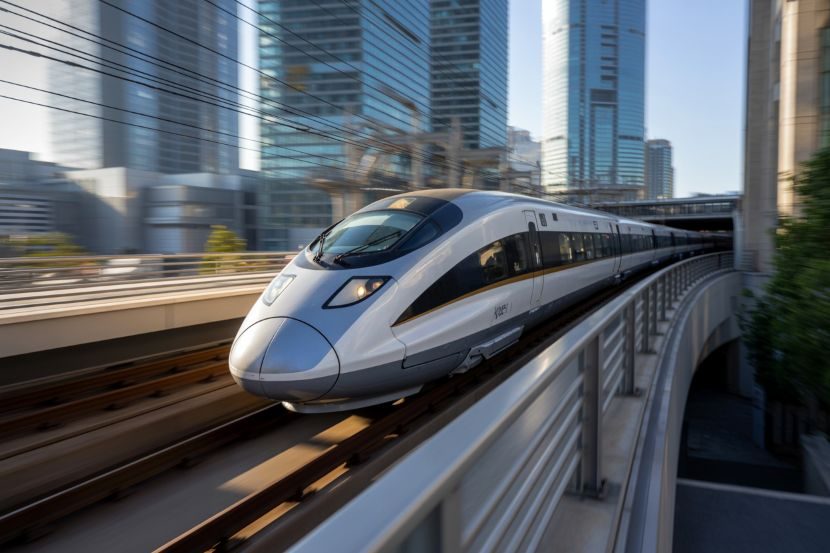
Étienne clutched his worn paper train ticket, watching the sleek TGV glide into Lyon station like something from a science fiction film. At 73, he’d spent decades driving the winding roads between his village and Paris, a grueling eight-hour journey that left him exhausted. “Mon Dieu,” he whispered to his granddaughter beside him, “this machine will get us there in two hours?”

She smiled, helping him aboard the pristine white and blue train. Within minutes of departure, Étienne was staring out the window in wonder as the French countryside blurred past at 320 kilometers per hour, his coffee remaining perfectly still on the table before him.
This is the reality of travel in France today, where high-speed rail has transformed not just transportation, but the entire experience of exploring one of the world’s most beloved destinations.

The French Rail Revolution That Changed Everything
France’s TGV (Train à Grande Vitesse) network represents one of the most successful transportation revolutions in modern history. Since 1981, this high-speed rail system has connected major French cities with unprecedented speed and comfort, fundamentally changing how both locals and tourists experience the country.
The network now spans over 2,800 kilometers, linking Paris to destinations like Lyon, Marseille, Bordeaux, and Strasbourg in times that once seemed impossible. What makes this system truly remarkable isn’t just the speed—it’s how it has made France feel smaller and more accessible than ever before.
The TGV didn’t just make travel faster; it made France feel like one cohesive destination rather than a collection of distant cities. You can have breakfast in Paris and lunch in the heart of Provence.
— Marie Dubois, French Tourism Board

Unlike air travel with its security delays and airport hassles, the TGV delivers you from city center to city center. You step off the train in downtown Lyon, Avignon, or Nice, ready to explore immediately. No lengthy transfers, no lost time in transit.
What Makes French High-Speed Rail the Ultimate Travel Experience
The comfort level aboard a TGV train rivals that of premium air travel, but with several distinct advantages that make it the preferred choice for discerning travelers:

- Spacious seating: Even economy class offers generous legroom and reclining seats
- Smooth ride quality: Advanced suspension technology eliminates the jarring motion of traditional trains
- Panoramic windows: Floor-to-ceiling glass provides uninterrupted views of the French landscape
- Onboard dining: Restaurant cars serve regional specialties and fine French wines
- Free WiFi: Stay connected throughout your journey
- Power outlets: Every seat includes electrical connections for devices
- Quiet cars: Designated silent zones for peaceful travel
The punctuality of French high-speed rail is legendary. TGV trains maintain an average on-time performance of over 85%, with delays typically measured in minutes rather than hours. This reliability allows travelers to plan their itineraries with confidence.
I’ve been riding the TGV for business for fifteen years, and I can count on one hand the number of times I’ve been significantly delayed. It’s simply the most reliable way to travel in Europe.
— Philippe Rousseau, Business Consultant
| Route | Journey Time | Distance | Top Speed |
|---|---|---|---|
| Paris to Lyon | 2 hours | 462 km | 320 km/h |
| Paris to Marseille | 3 hours 20 min | 750 km | 320 km/h |
| Paris to Bordeaux | 2 hours 15 min | 568 km | 320 km/h |
| Paris to Strasbourg | 1 hour 46 min | 398 km | 320 km/h |
| Paris to Nice | 5 hours 30 min | 991 km | 320 km/h |
How High-Speed Rail Opens Up France for Every Type of Traveler
The beauty of France’s rail network lies in its accessibility to different travel styles and budgets. Whether you’re a backpacking student or a luxury traveler, the system accommodates your needs without compromising on the core experience.
For families, the TGV eliminates the stress of long car journeys with restless children. Kids can move around, visit the snack car, and watch the scenery change dramatically from urban landscapes to rolling vineyards to Mediterranean coastlines. Many trains feature family compartments with extra space for luggage and strollers.
Business travelers appreciate the ability to work productively during transit. The stable ride quality makes laptop use comfortable, while reliable internet connectivity ensures important calls and video conferences can continue uninterrupted.
As a travel writer, I’ve experienced transportation systems worldwide, but nothing matches the TGV for combining speed, comfort, and that uniquely French attention to the finer details of the journey itself.
— James Mitchell, Travel & Leisure Magazine
Luxury travelers can opt for first-class service, which includes wider seats, complimentary meals prepared by renowned chefs, and access to exclusive lounges in major stations. The experience rivals premium airline service while offering superior views and city-center convenience.
The Environmental and Cultural Impact
Beyond personal comfort, choosing high-speed rail in France represents an environmentally conscious travel decision. TGV trains produce approximately 14 times less CO2 per passenger than equivalent flights, making them one of the most sustainable ways to explore the country.
This environmental benefit comes without sacrificing the cultural richness of the journey. Unlike flying over France at 35,000 feet, train travel allows you to witness the gradual transition between regions—watching as Parisian suburbs give way to Burgundy vineyards, then to the lavender fields of Provence.
The rail network has also revitalized smaller cities by making them easily accessible from major population centers. Towns like Avignon and Aix-en-Provence have experienced tourism booms directly attributed to their high-speed rail connections.
The TGV has democratized access to France’s cultural treasures. Places that once required significant time and planning to reach are now viable day trip destinations.
— Dr. Catherine Leroy, French Institute of Tourism Studies
For international visitors, the rail system integrates seamlessly with broader European networks. You can board a train in London, travel through the Channel Tunnel, and continue on high-speed rail to destinations across France without changing platforms.
Planning Your French Rail Adventure
Booking TGV tickets has become increasingly user-friendly, with mobile apps and English-language websites making reservations simple for international travelers. Advance booking often provides significant savings, with early-bird fares sometimes costing less than equivalent bus journeys.
The key to maximizing your French rail experience lies in understanding the network’s flexibility. Many tickets allow for changes and cancellations, enabling spontaneous travel decisions that would be prohibitively expensive with airlines.
Station facilities across the network maintain consistently high standards, with comfortable waiting areas, quality dining options, and clear multilingual signage. Major stations like Gare de Lyon in Paris and Part-Dieu in Lyon function as destinations in their own right, featuring shopping centers and cultural exhibitions.
FAQs
How far in advance should I book TGV tickets?
Booking 2-4 weeks ahead typically offers the best prices, though last-minute tickets are usually available.
Can I bring luggage on TGV trains?
Yes, there are no weight restrictions and ample storage space above seats and at car ends.
Do TGV trains run on time?
TGV maintains over 85% on-time performance, with most delays under 15 minutes.
Is food available on board?
All TGV trains have snack cars, with restaurant service on longer routes.
Can I use my phone during the journey?
Yes, all trains have cellular coverage and free WiFi throughout the route.
Are there discounts for seniors or students?
Yes, various discount cards offer savings of 25-50% for frequent travelers, seniors, and young people.

Leave a Reply